

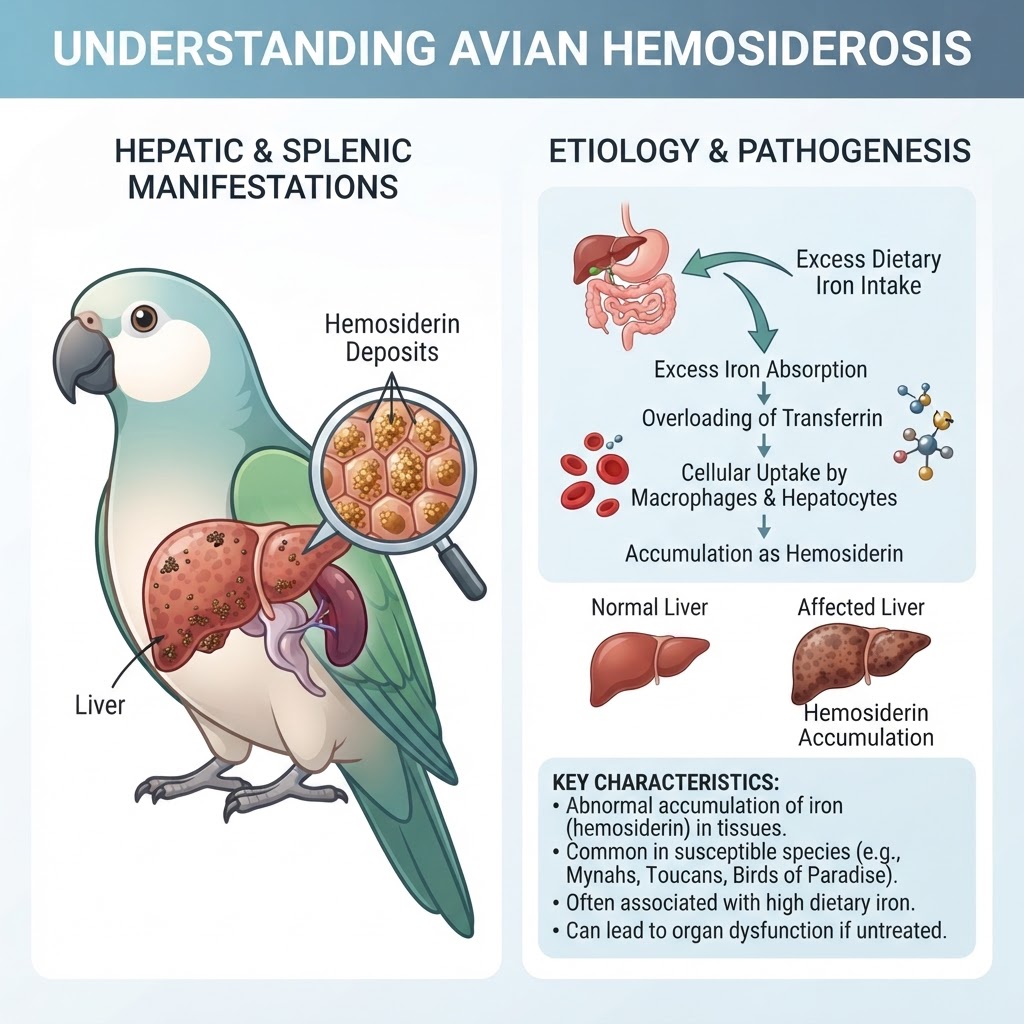
Pathophysiology of Hepatic Iron Overload in Birds
Avian hemosiderosis represents a state of iron toxicity where the body's iron-binding capacity is exceeded, leading to the deposition of excess iron as hemosiderin. This process often starts in the liver but can become systemic. When iron intake exceeds the biological requirement, the free iron participates in Fenton reactions, generating reactive oxygen species (ROS) that damage cellular proteins, lipids, and DNA. This oxidative damage is the catalyst for the subsequent inflammatory and fibrotic response observed in Metabolic Bone Disease and other nutritional disorders, though the mechanism here specifically targets the liver.
Iron Storage and Parenchymal Damage
The liver acts as the primary reservoir for iron. In healthy birds, ferritin holds iron in a safe, soluble form. However, under chronic excess, ferritin production is overwhelmed, and iron is stored in the less bioavailable and more reactive form, hemosiderin. This leads to hepatocyte necrosis and the recruitment of macrophages to attempt to clear the debris, which only exacerbates the inflammatory cycle.
Clinical Manifestations and Symptom Progression
Birds suffering from hemosiderosis often show vague signs that can be confused with Dietary Hypersensitivity or other systemic illnesses. Monitoring for subtle changes in behavior is essential.
Early Warning Signs
-
Lethargy and decreased activity levels
-
Reduced appetite and selective feeding
-
Subtle changes in dropping color or consistency
-
Unexplained weight loss
Advanced Indicators (Emergency)
-
Dyspnea (labored breathing) due to respiratory iron deposition
-
Ascites (abdominal distension) resulting from liver failure
-
Biliverdinuria or jaundice (yellowing of skin/mucosa)
-
Sudden weakness or inability to perch
Etiology: The Role of Dietary Iron and Genetic Predisposition
Nutritional Excess and Softbill Metabolism
The primary cause of hemosiderosis is the chronic ingestion of diets high in iron, specifically in species evolved to thrive on fruits and insects with low iron content. Unlike mammals, certain avian species lack an effective feedback mechanism to inhibit intestinal iron absorption, leading to an inevitable buildup. While Cachexia is often associated with advanced illness, early-stage hemosiderosis is frequently found in birds that appear outwardly plump but are metabolically overloaded.
Genetic and Species-Specific Risks
Certain families of birds, including Toucans, Mynas, and Birds of Paradise, have a hereditary predisposition to iron storage disease. When these birds are fed standard commercial pelleted diets formulated for parrots—which are significantly higher in iron—the risk of developing hemosiderosis increases exponentially within just a few years of life.
Veterinary Diagnostic Procedures
Assessing Hepatic Function
Veterinarians will typically start with a comprehensive chemistry panel to look for elevated liver enzymes. However, enzymes alone are not diagnostic. Liver biopsy remains the gold standard for confirmation, providing the ability to stain for iron and quantify the extent of the deposition.
Imaging and Non-Invasive Diagnostics
Radiography may reveal hepatomegaly or increased density in the abdominal organs. Ultrasound is often used to assess the texture of the liver and detect signs of fluid accumulation or fibrosis. In some cases, blood serum iron levels and total iron-binding capacity (TIBC) are measured to monitor for acute spikes, though they can be misleading in chronic cases.
Therapeutic Interventions and Management
Dietary Modification and Iron Chelation
The cornerstone of treatment is the immediate transition to an iron-restricted diet. This involves replacing high-iron pellets with fruits, vegetables, and low-iron formulated foods. In severe cases, veterinarians may utilize iron-chelating agents such as deferoxamine or oral equivalents to mobilize and excrete stored iron from the liver.
Supportive Care and Liver Protection
Supportive care includes the administration of lactulose to reduce ammonia levels (if hepatic encephalopathy is suspected) and antioxidants such as Vitamin E and Selenium to combat oxidative damage. Regular monitoring of body condition is critical, as birds often suffer from Dietary Indiscretion alongside iron issues.
