

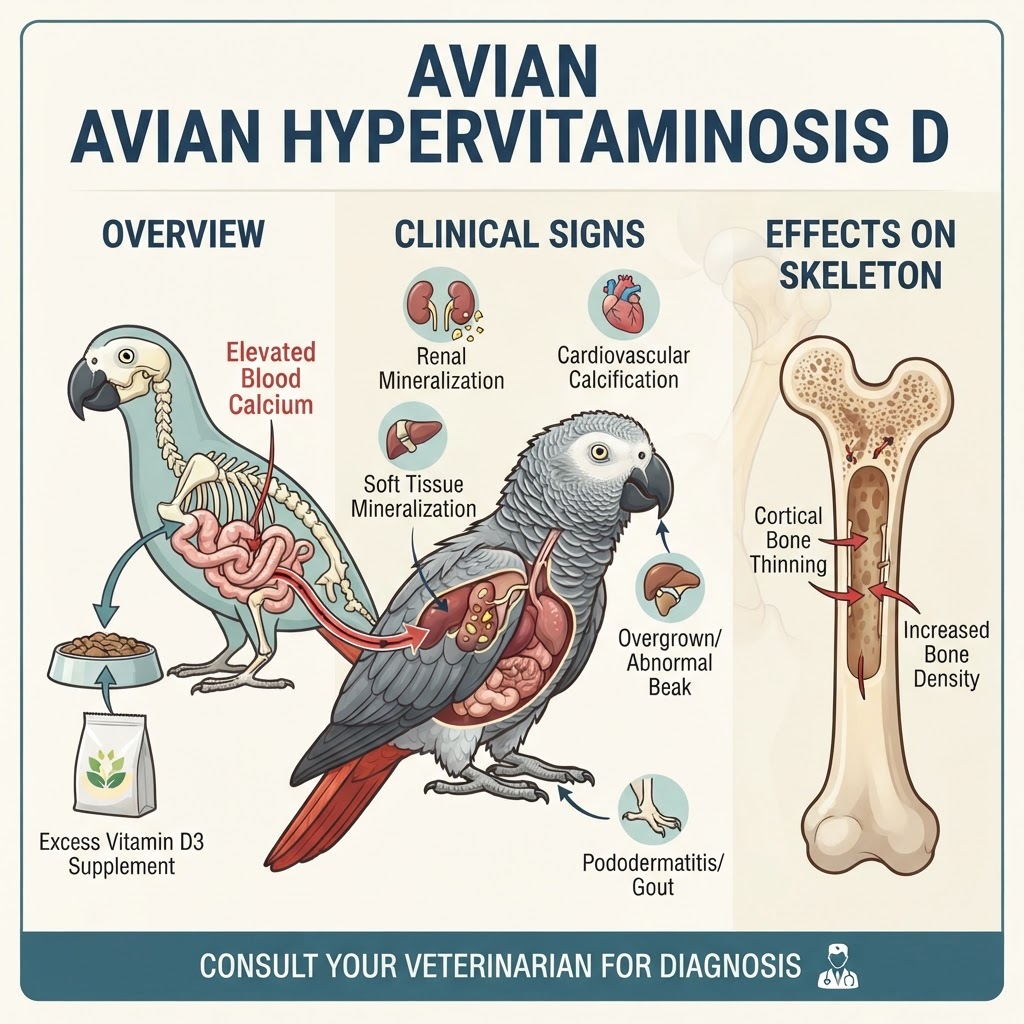
Understanding Avian Hypervitaminosis D: Pathophysiology and Toxicity
Avian hypervitaminosis D occurs when there is an overabundance of cholecalciferol (Vitamin D3) in a bird's system. Unlike some mammals, birds are highly sensitive to Vitamin D3 levels due to their complex metabolic bone disease regulation pathways. When dietary intake exceeds the bird's physiological requirements, the excess triggers an unchecked mobilization of calcium from bone and increased absorption from the gastrointestinal tract.
Cholecalciferol Toxicity and Hypercalcemia
The primary concern with this condition is hypercalcemia, which causes a systemic cascade. Once blood calcium exceeds the renal threshold, the kidneys struggle to filter the mineral, leading to secondary damage. This is a critical departure from rickets, which involves a deficiency rather than an excess.
Clinical Indicators: Recognizing Symptoms of Vitamin D Overdose
Birds are masters at masking illness, meaning that by the time overt symptoms are visible, the toxicity is often advanced. Owners must remain vigilant for subtle changes in behavior or droppings.
Gastrointestinal and Renal Dysfunction
-
Polyuria and Polydipsia: Increased thirst and urine production as the kidneys struggle to excrete excess calcium.
-
Regurgitation and Anorexia: Digestive distress often occurs early in the clinical manifestation.
-
Lethargy and Depression: General malaise resulting from electrolyte imbalances.
Severe Clinical Signs (Emergency Indicators)
-
Respiratory Distress: Labored breathing can occur if soft tissue mineralization affects the cardiac or vascular structures.
-
Seizures or Tremors: Extreme electrolyte fluctuations can impact neurological function.
-
Weight Loss: Rapid cachexia may occur as the bird stops eating due to systemic pain or discomfort.
Origins of Toxicity: Nutritional Sources and Risks
Hypervitaminosis D is almost exclusively an iatrogenic or management-related condition. Understanding the source is vital to preventing recurrence.
Dietary Over-supplementation
The most common cause is the improper use of multi-vitamin powders or drops added to water or food. Owners often believe that "more is better," failing to account for the Vitamin D3 already present in high-quality commercial pellets. Providing additional supplements without veterinary guidance frequently leads to toxic accumulation.
Species-Specific Sensitivity
Certain species, particularly African Greys and Macaws, appear more sensitive to variations in vitamin intake, though any psittacine species can be affected. Accidental ingestion of rodenticides containing cholecalciferol is another high-risk, though distinct, source of poisoning.
Diagnostic Protocols: Evaluating Calcium Levels
Veterinarians utilize a combination of diagnostics to confirm the diagnosis and assess organ damage.
Laboratory and Diagnostic Imaging
-
Biochemical Profile: Measuring ionized calcium and total calcium levels is the gold standard.
-
Radiography: X-rays may reveal radiopaque mineral deposits in the kidneys or along the major blood vessels.
-
Renal Function Tests: Monitoring uric acid levels is essential, as the kidneys are the primary organs affected by hypercalcemia.
Therapeutic Strategies for Hypercalcemia
Treatment is aggressive and directed at flushing the system and stopping the absorption of Vitamin D3.
Supportive Care and Chelation
- Aggressive Fluid Therapy: Subcutaneous or intravenous fluids are used to increase urine production and promote calcium excretion.
- Dietary Management: Immediate cessation of all vitamin supplements and the introduction of a low-calcium, high-fiber diet.
- Corticosteroids or Diuretics: Medications such as furosemide may be prescribed to assist in renal calcium excretion under strict clinical supervision.
Long-Term Management and Recovery
Recovery is a slow process of allowing the body to mobilize deposits and restore renal function. Periodic blood work is necessary to ensure the liver and kidneys are healing effectively. Owners must be prepared for a transition to a strictly controlled diet, avoiding common pitfalls such as dietary indiscretion by offering human table foods that might contain hidden vitamins.
Prevention Strategies: Maintaining Nutritional Balance
The best approach to avian health is a balanced commercial diet. By feeding high-quality pelleted diets, most birds receive all the necessary vitamins, rendering additional supplements unnecessary and potentially dangerous.
