

Understanding Zinc-Responsive Dermatosis (Syndrome I vs. Syndrome II)
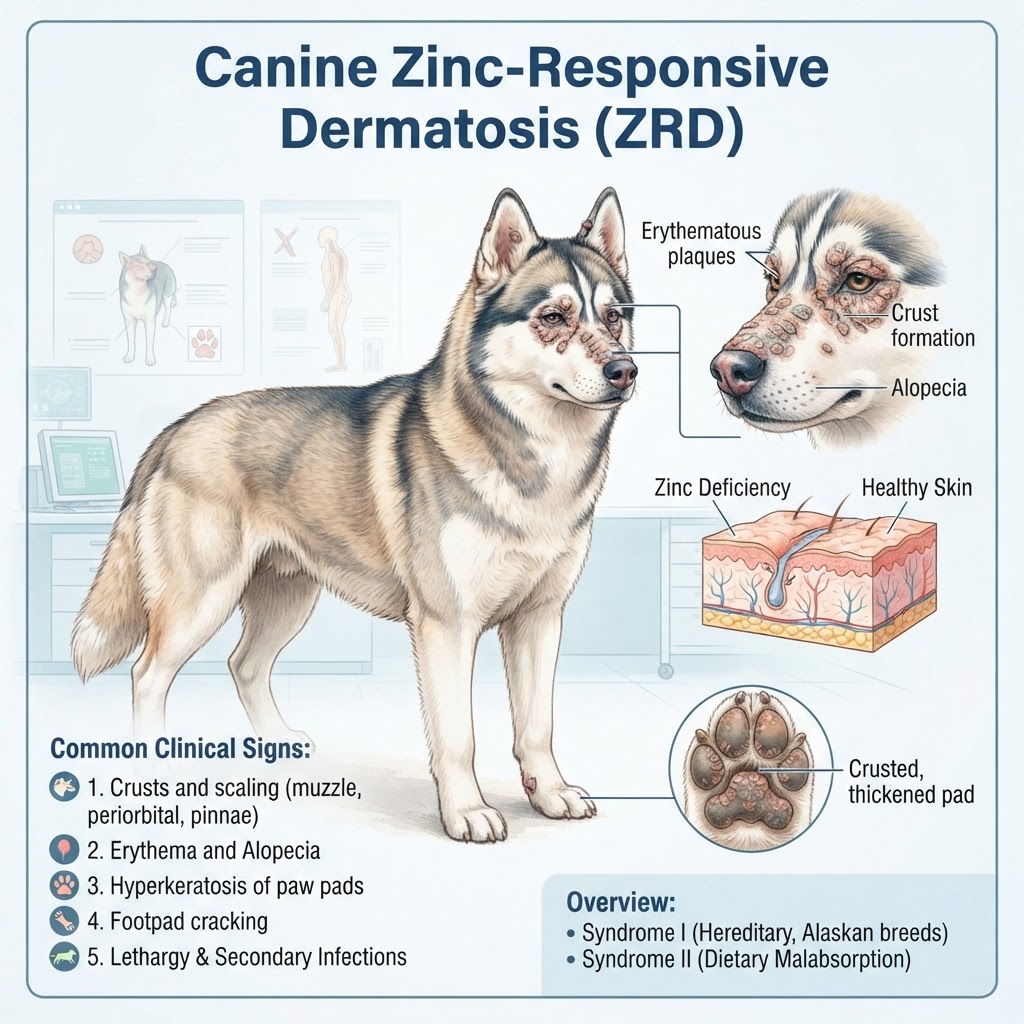
Canine zinc-responsive dermatosis is an inflammatory skin condition caused by inadequate systemic zinc levels or metabolic failure to utilize available zinc. The condition is categorized into two distinct clinical syndromes based on the underlying etiology. Syndrome I is often identified in Arctic-type breeds, which exhibit a genetic susceptibility resulting in impaired intestinal absorption. Even when dietary intake is adequate, the intestinal mucosa fails to transport sufficient zinc into the bloodstream.
Syndrome II is more common in fast-growing large breed puppies. This version is often acquired due to an imbalance in the diet, such as an excess of calcium or phytates which act as antagonists to zinc, effectively rendering it unavailable to the body. This is a form of Zinc Deficiency caused by nutritional mismanagement rather than an inherent genetic defect.
Clinical Manifestations and Dermatological Progression
Early Signs of Epidermal Dysfunction
Owners typically first notice thinning hair and the development of crusty, scaly patches. These lesions usually present symmetrically, with the face being the most common site of initial involvement. You may see distinct crusts forming around the eyes, the nasal planum, and the corners of the mouth.
Advanced Lesion Development
As the disease progresses, the footpads often become hyperkeratotic, thickened, and painful. This leads to limping or a reluctance to walk. The skin may also exhibit deep fissures, which are highly susceptible to secondary bacterial or yeast infections. If the underlying cause is Dietary Hypersensitivity, the skin may also appear intensely inflamed and pruritic.
Etiology and Risk Factors
Genetic Predisposition in Nordic Breeds
Siberian Huskies, Alaskan Malamutes, and Samoyeds are significantly overrepresented in cases of Syndrome I. These breeds have a specialized genetic mutation that limits zinc uptake. In these instances, regular dog food may contain enough zinc for a generic pet but not enough for the specific metabolic requirements of these breeds.
Nutritional Imbalance in Growing Puppies
In Syndrome II, the cause is almost exclusively related to diet. Providing a puppy with an over-supplemented calcium diet can inhibit zinc absorption. Furthermore, diets rich in plant proteins may contain high levels of phytates, which sequester zinc. While similar to Metabolic Bone Disease in terms of nutritional failure, this condition strictly targets the integumentary system.
Diagnostic Protocols
Veterinarians diagnose this condition by ruling out other causes of crusting skin disease. This begins with a thorough physical exam to identify the distribution of lesions. A skin biopsy is the diagnostic gold standard, as it shows characteristic parakeratotic hyperkeratosis. While blood serum zinc levels can be measured, they are often unreliable, as systemic zinc levels may appear normal even when cutaneous levels are critically low.
Treatment and Nutritional Therapy
Treatment focuses on replenishing zinc levels and managing secondary infections. For Syndrome II, transitioning to a high-quality, balanced puppy diet is often curative. For Syndrome I, owners will need to add zinc supplementation to the diet for the duration of the dog's life. It is vital to consult with a veterinarian to determine the correct dosage, as zinc toxicity can be fatal.
Monitoring Recovery and Long-term Management
Recovery typically begins within two to three weeks of consistent supplementation. Owners should watch for a decrease in crusting and the return of hair growth in affected areas. In some dogs with severe, chronic issues, the skin may never return to a completely normal state, requiring long-term moisturizing therapy or specific shampoo regimens to keep the skin barrier protected.
