

Understanding the Neurodegeneration of Equine Motor Neuron Disease (EMND)
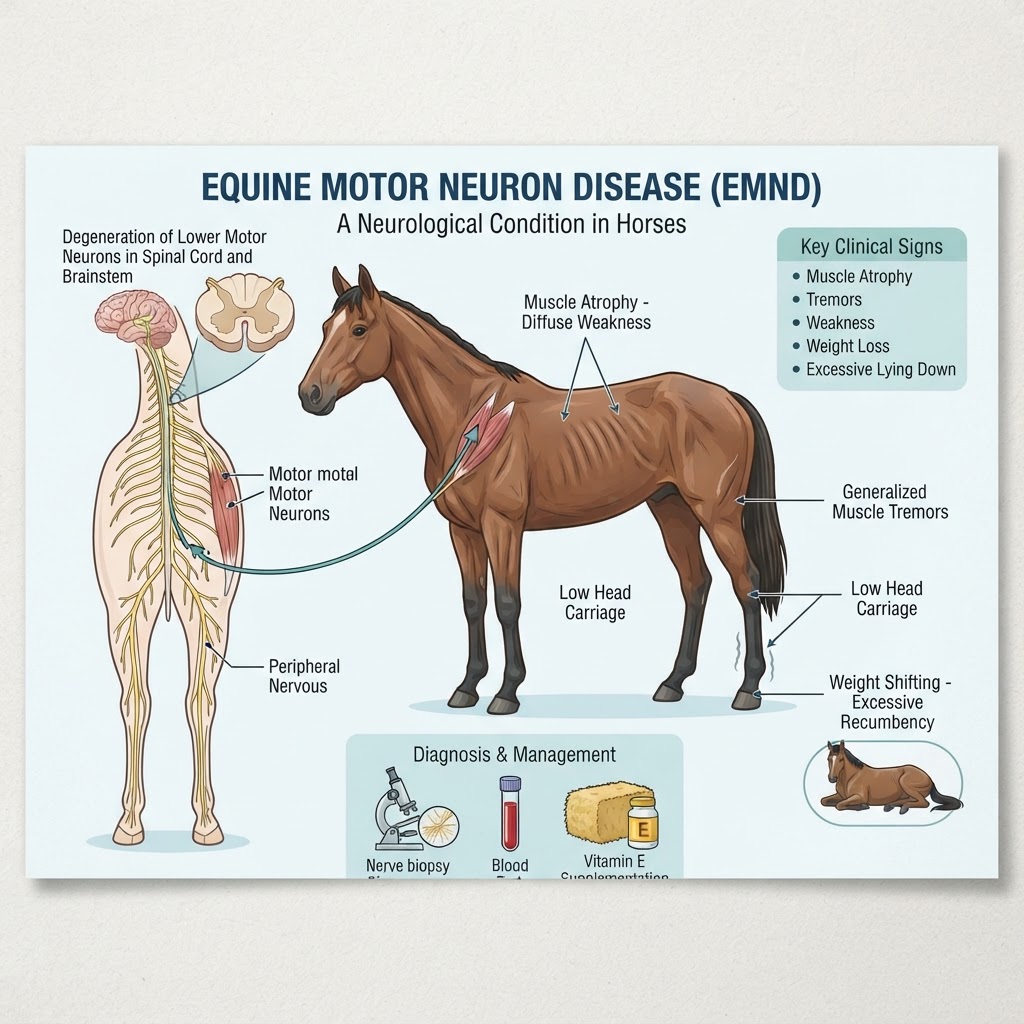
Equine Motor Neuron Disease (EMND) is a degenerative disorder affecting the lower motor neurons, which are responsible for transmitting signals from the spinal cord to the skeletal muscles. Unlike Equine Degenerative Myeloencephalopathy (EDM), which impacts the spinal cord's sensory and motor tracts more broadly, EMND specifically targets the cell bodies within the ventral grey matter of the spinal cord and the motor nuclei of the brainstem.
Oxidative Stress and Vitamin E Deficiency
The primary driver of this neurodegeneration is oxidative stress occurring in the absence of sufficient alpha-tocopherol (Vitamin E). Horses kept in confinement or on dry lots for extended periods without access to fresh, high-quality forage are at the highest risk. The deficiency causes the nervous system to lose its primary line of defense against reactive oxygen species, leading to irreversible cellular death.
Clinical Manifestations and Diagnostic Recognition
Physical Signs of Lower Motor Neuron Loss
Affected horses often exhibit a characteristic stance where they constantly shift their weight, known as a "camped-under" posture. This occurs because the limbs become fatigued easily, and the animal is searching for a more stable center of gravity. Owners may notice the following:
-
Persistent muscle fasciculations (twitches).
-
Significant muscle atrophy, particularly along the topline and hindquarters.
-
A tucked-up appearance of the abdomen.
-
Excessive lying down or an inability to stand for long periods.
Diagnostic Techniques for Neurological Assessment
Veterinarians approach the diagnosis by ruling out other neurological diseases. A Polyneuropathy evaluation is often considered in the initial stages. Diagnostic steps include:
-
Biopsy: A biopsy of the sacrocaudalis dorsalis medialis muscle is the gold standard for confirming EMND.
-
Blood Work: Assessing serum alpha-tocopherol levels to confirm a deficiency.
-
Neurological Exam: Observing the horse's response to tactile stimuli and postural adjustments.
Management, Supportive Care, and Long-Term Outlook
Nutritional Supplementation and Environment
Once diagnosed, the immediate goal is to halt further oxidative damage. High-dose oral vitamin E supplementation is mandatory. Access to green pasture is the most effective environmental correction. If the horse remains recumbent or shows signs of severe Cauda Equina Syndrome mimics, specialized nursing care is required.
Prognosis and Quality of Life
While some horses stabilize, many will not regain lost muscle mass. Long-term management involves constant monitoring for secondary complications like pressure sores or respiratory infections caused by prolonged recumbency. If the horse is unable to stand, Lumbosacral Stenosis and other degenerative conditions must be kept in mind during the consultation to ensure a humane prognosis is reached.
