

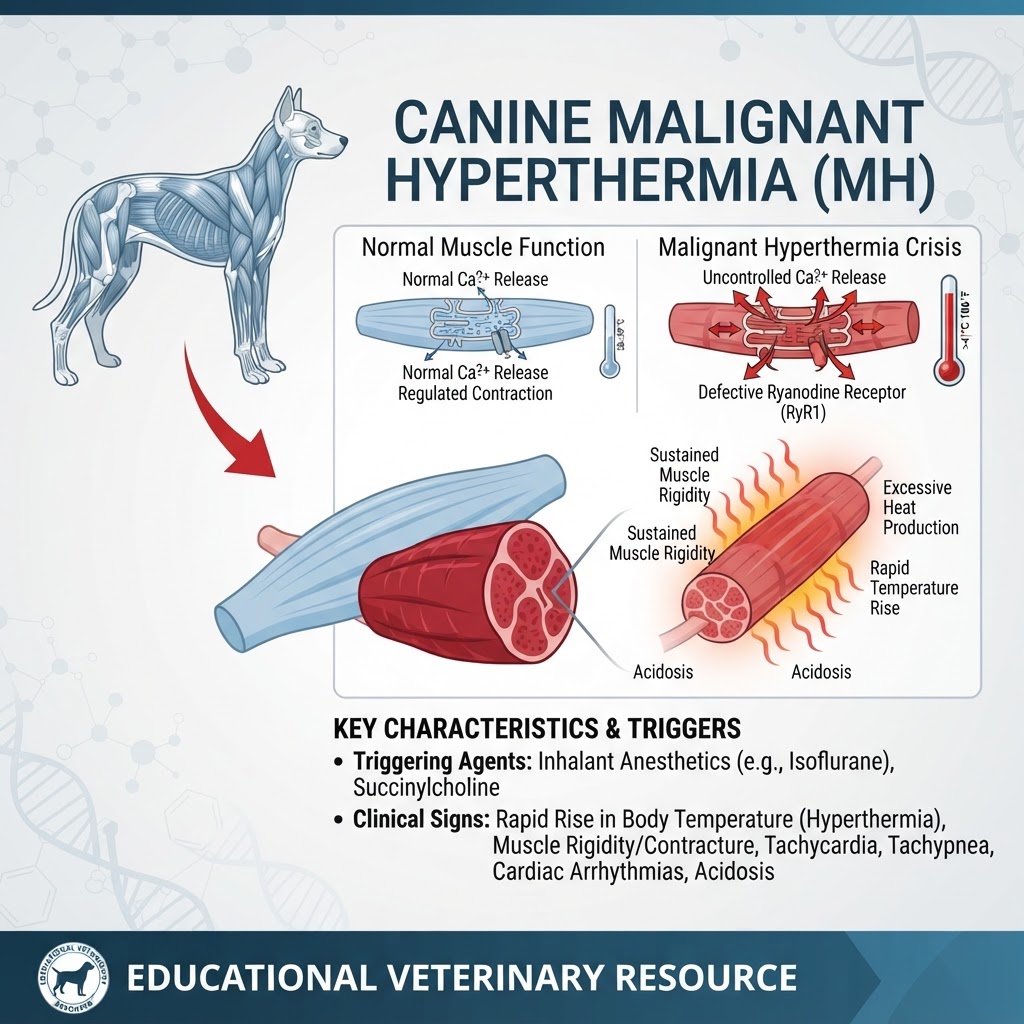
Pathophysiology of Ryanodine Receptor Mutations
Canine malignant hyperthermia is fundamentally a disorder of intracellular calcium homeostasis. In affected individuals, the RYR1 gene mutation renders the calcium release channel in the sarcoplasmic reticulum hypersensitive to specific triggers. When exposed to halogenated anesthetics, the channels remain open, flooding the cytoplasm with calcium. This triggers a hypermetabolic state characterized by excessive adenosine triphosphate (ATP) depletion, lactacidosis, and a rapid rise in body temperature. Unlike Heat Stroke, which is an environmentally induced rise in core temperature, malignant hyperthermia is an endogenously generated metabolic firestorm.
Clinical Indicators of Hypermetabolic Crisis
Recognizing the onset of an MH event during surgery is critical for survival. Signs often progress from subtle physiological shifts to overt systemic collapse. Early indicators include an unexplained rise in end-tidal CO2 (capnography) and tachycardia. As the condition advances, muscle rigidity (specifically masseter muscle spasms) and cyanosis are frequently observed. The hyperthermic response is usually the terminal marker, with rectal temperatures often exceeding 106°F (41.1°C). Owners should understand that this is not an orthopedic issue like Canine Hip Dysplasia or Patellar Luxation, but a systemic metabolic emergency.
Genetic Transmission and Breed Predisposition
The condition is inherited in an autosomal dominant fashion, meaning only one copy of the mutated gene is required to confer susceptibility. Breed-specific risks have been identified, particularly in breeds like Greyhounds, Labradors, and Pointers. Unlike Degenerative Myelopathy, which is a slow-progressing neurological condition, malignant hyperthermia remains entirely asymptomatic until a triggering event forces the metabolic breakdown. Veterinarians prioritize screening breeding pairs to reduce the prevalence of the RYR1 mutation in susceptible populations.
The Emergency Management Protocol: Dantrolene Intervention
Immediate cessation of the anesthetic agent is the first requirement. Veterinarians must switch to a non-triggering anesthetic circuit and initiate aggressive cooling measures. The pharmacological cornerstone of treatment is Dantrolene, a skeletal muscle relaxant that specifically targets the RYR1 channel to stop further calcium release. Supportive care focuses on addressing the profound metabolic acidosis using bicarbonate therapy and managing secondary cardiac arrhythmias that arise from the high extracellular potassium levels resulting from rapid muscle cell death. Long-term, these patients must be flagged in medical records to avoid all triggering anesthetic agents throughout their lifetime.
