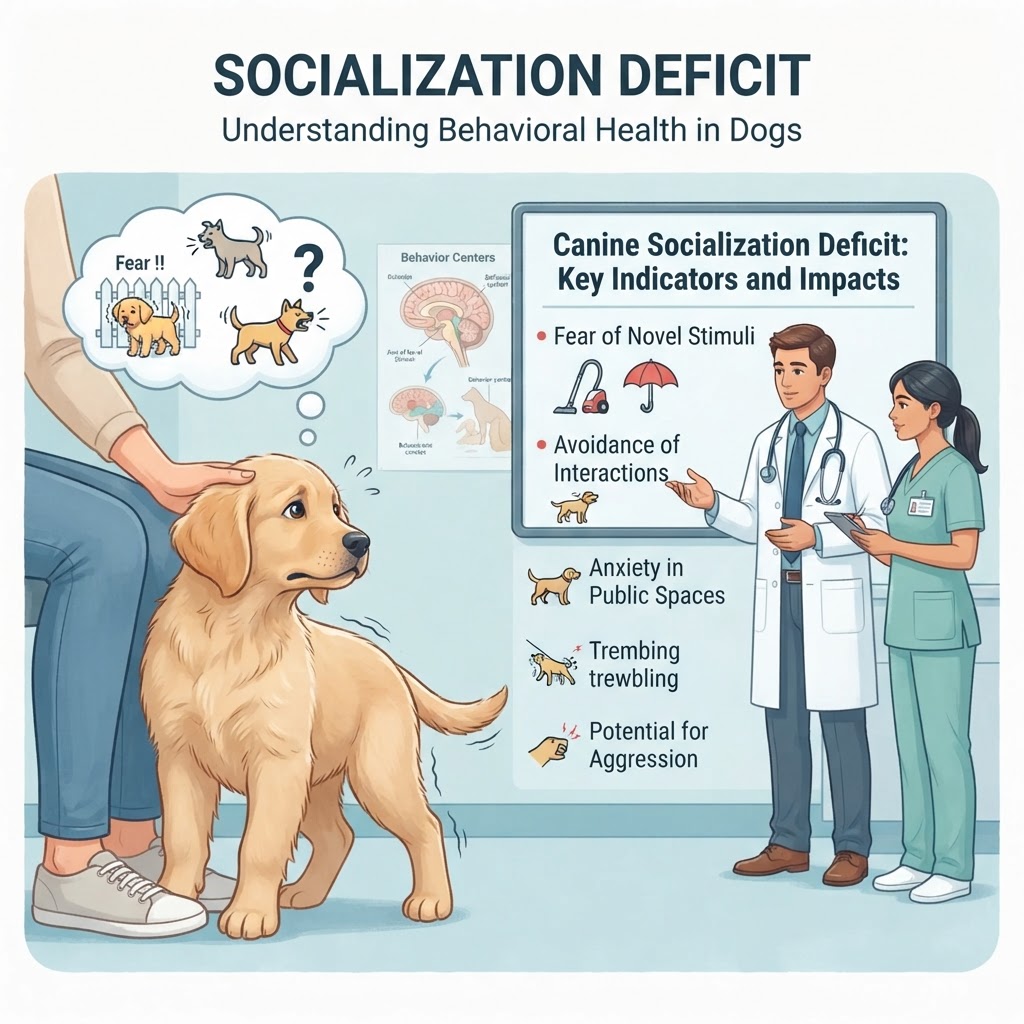
Understanding Socialization Deficit in Canines
Socialization deficit, often referred to as incomplete socialization, is a behavioral condition in dogs resulting from insufficient positive exposure to diverse people, animals, environments, and stimuli during their critical developmental period (approximately 3 to 16 weeks of age). This critical window is when puppies are most receptive to learning about the world and forming positive associations. A lack of adequate socialization during this time can lead to a lifelong predisposition to fear, anxiety, and reactivity towards novel stimuli, significantly impacting a dog's ability to navigate everyday life and interact appropriately.
Types of Socialization Deficit
While not formally classified into distinct subtypes in veterinary literature, the deficit can be broadly categorized by the affected stimuli:
- Socialization Deficit with People: Fear and avoidance of unfamiliar individuals, often manifesting as hiding, cowering, or even defensive aggression when approached.
- Socialization Deficit with Other Animals: Apprehension or reactivity towards other dogs or animals, ranging from avoidance to aggressive barking or lunging.
- Environmental Socialization Deficit: Anxiety and fear responses to specific environments (e.g., busy streets, veterinary clinics, car rides) or stimuli (e.g., loud noises, certain objects).
Recognizing Signs of Socialization Deficit
The manifestations of socialization deficit can range from subtle avoidance to overt fear and aggression. Early identification is key to effective management.
- Fearful Body Language: Excessive tail tucking, lip licking, yawning, avoiding eye contact, trembling, or attempting to flee.
- Avoidance Behaviors: Refusal to approach new people or animals, hiding behind owners, or seeking escape from novel situations.
- Reactivity and Aggression: Barking, lunging, growling, snapping, or biting when confronted with perceived threats (e.g., strangers, unfamiliar dogs, loud noises). This is often a defensive response rooted in fear.
- Hypervigilance: An exaggerated startle response to everyday sounds or movements.
- Anxiety in Novel Environments: Displaying signs of distress, restlessness, or attempts to escape when taken to new places.
- Difficulty with Handling: Resistance to being touched, petted, or groomed by unfamiliar individuals.
Warning Signs Requiring Immediate Veterinary Attention: Any signs of extreme fear that lead to defensive aggression, particularly if there is a risk of injury to the dog or others, warrant prompt veterinary consultation. This can escalate quickly.
Factors Contributing to Socialization Deficit
Multiple factors can contribute to the development of socialization deficits in puppies. Understanding these can help in prevention and management.
Causes and Risk Factors
- Lack of Early Exposure: The most common cause is insufficient positive exposure to a wide range of people, animals, sounds, and environments during the critical socialization window (3-16 weeks). This can occur if a puppy is kept in isolation, has a very limited environment, or has negative early experiences.
- Inappropriate Early Experiences: Negative or traumatic encounters during the socialization period (e.g., rough handling by humans, fights with other dogs, frightening loud noises) can create lasting fear.
- Breeding and Early Environment: Puppies from commercial breeding facilities (puppy mills) or those raised in unstable or stressful environments may not receive adequate socialization.
- Genetics: While not a direct cause of deficit, certain genetic predispositions can make a dog more sensitive to fear and anxiety, making proper socialization even more critical.
- Owner Behavior: Overprotective owners may inadvertently limit a puppy's exposure to the world, contributing to the deficit. Conversely, forcing a fearful puppy into overwhelming situations can worsen fear.
Breed Predispositions
While any dog can develop socialization deficits, breeds known for heightened sensitivity, anxiety, or protective instincts may require more diligent socialization efforts. These can include some herding breeds, guard breeds, and terrier types. However, it is crucial to remember that socialization is an environmental factor, and even breeds not typically predisposed can develop this issue if not properly socialized. Conversely, breeds often perceived as 'fearful' can thrive with excellent socialization. Age and sex are less significant factors than the quality and quantity of early experiences.
Veterinary Diagnosis of Socialization Deficit
Diagnosing socialization deficit relies heavily on a thorough history and behavioral assessment, as there are no definitive diagnostic tests like blood work or imaging.
The Diagnostic Process
- Detailed Behavioral History: The veterinarian will ask extensive questions about the puppy's history, including their early life environment, the age they joined the household, their interactions with people and animals, and specific situations that elicit fear or reactivity. Owner observations are paramount.
- Physical Examination: A complete physical exam is performed to rule out any underlying medical conditions that could be contributing to behavioral changes (e.g., pain, neurological issues, sensory deficits). While the physical exam itself doesn't diagnose the deficit, it's crucial to ensure no medical issues are being missed.
- Behavioral Assessment: The veterinarian may observe the dog's behavior in the clinic or ask the owner to describe reactions to various stimuli. This helps gauge the dog's responses to different people, sounds, and environments. Standardized questionnaires are often used.
- Ruling Out Medical Causes: Conditions like hypothyroidism, neurological disorders, chronic pain, or sensory impairments (vision or hearing loss) can manifest with behavioral changes mimicking socialization deficits. These must be excluded.
Differential Diagnoses
It is essential to differentiate socialization deficit from other behavioral and medical conditions that can present with similar signs:
- Aggression: While aggression can be a symptom of socialization deficit, it can also stem from other causes like Compulsive Disorder, pain, territoriality, or resource guarding.
- Separation Anxiety: This condition involves distress when left alone and is distinct from generalized fear of novel stimuli.
- Noise Phobia and Thunderstorm Phobia: These are specific phobias, whereas socialization deficit is a broader issue with multiple triggers.
- Canine Compulsive Disorder: Conditions like tail chasing or excessive licking might be mistaken for fear responses but are often rooted in compulsive behaviors.
- Medical Conditions: Pain, neurological diseases, sensory deficits (vision/hearing loss), and endocrine disorders can all cause behavioral changes that mimic fear or anxiety.
Managing Socialization Deficit
Management of socialization deficit focuses on building the dog's confidence and teaching them coping mechanisms through carefully controlled positive experiences. It is a long-term commitment that requires patience and consistency.
Treatment Modalities
- Behavior Modification: This is the cornerstone of treatment. Techniques include desensitization (gradually exposing the dog to a trigger at a low intensity) and counter-conditioning (associating the trigger with positive reinforcement like treats or praise). This helps the dog form new, positive associations.
- Environmental Enrichment: Providing a stimulating and safe environment at home can help reduce anxiety and build confidence. This includes puzzle toys, training games, and appropriate chew items.
- Medications: In moderate to severe cases, veterinary-supervised medications may be prescribed to help manage anxiety and reduce fear, making behavior modification more effective. These can include anti-anxiety medications (e.g., SSRIs, TCAs) or short-acting sedatives for specific stressful events.
- Professional Guidance: Working with a certified professional dog trainer or a veterinary behaviorist is highly recommended. They can create a tailored behavior modification plan and guide owners through the process.
- Management Strategies: Avoiding situations that overwhelm the dog while working on behavior modification is crucial. This might mean choosing quieter walking routes or avoiding dog parks until the dog is more confident.
Recovery and Aftercare
Recovery from socialization deficit is typically a gradual process, focusing on long-term management and improved quality of life rather than a complete 'cure'.
Recovery Timeline and Phases
-
Phase 1: Foundation Building & Stabilization
-
Timeframe: 1-3 months
-
Description: Initial focus on establishing a strong bond with the owner, implementing basic management strategies to avoid overwhelming situations, and potentially starting mild desensitization exercises. If medication is used, this phase involves finding the right dosage. The goal is to reduce immediate distress and create a safe baseline.
-
Phase 2: Gradual Exposure & Counter-Conditioning
-
Timeframe: 3-12 months
-
Description: Implementing structured desensitization and counter-conditioning protocols. This involves carefully controlled, low-intensity exposures to triggers, paired with high-value rewards. Progress is slow and individual, with setbacks expected.
-
Phase 3: Consolidation & Generalization
-
Timeframe: 12
- months and ongoing
- Description: The dog begins to generalize positive experiences to slightly more challenging situations. Continued practice and occasional booster sessions are needed. The goal is for the dog to be able to cope with most everyday situations with less anxiety and reactivity.
Prevention Strategies
Preventing socialization deficit is far more effective and less stressful than managing it. It requires proactive effort during the critical developmental window.
Proactive Socialization Practices
- Early and Varied Exposure: Safely expose puppies to a wide range of people (different ages, appearances), well-behaved vaccinated dogs, various environments (parks, streets, stores that allow dogs), and everyday sounds (traffic, vacuum cleaners, thunderstorms) in a positive and controlled manner.
- Positive Reinforcement: Ensure all interactions are positive and rewarding. Use treats, praise, and play to create good associations.
- Avoid Overwhelming Experiences: Do not force puppies into situations where they are overly frightened. If a puppy is showing signs of stress, remove them from the situation and try again later at a lower intensity.
- Puppy Socialization Classes: Enroll in well-run puppy classes that prioritize safety and positive interaction under expert supervision.
- Controlled Introductions: When introducing your puppy to new dogs or people, do so on leash in a calm environment and allow them to approach at their own pace.
- Consistent Routine: Provide a predictable routine that includes play, training, rest, and exposure to new things.
Emergency Care Considerations
While socialization deficit is typically a long-term behavioral issue, certain situations warrant immediate veterinary attention.
Decision Framework for Emergency Care
- Sudden Onset of Extreme Fear/Anxiety: If a dog that was previously well-adjusted suddenly exhibits severe, debilitating fear or anxiety without an obvious trigger, it could indicate an underlying medical issue (e.g., pain, neurological event) or a severe exacerbation of a phobia. Seek veterinary care promptly.
- Aggression Leading to Injury: If a dog with socialization deficit bites or causes injury to a person or another animal, it constitutes an emergency. This requires immediate veterinary assessment to manage the immediate risk and assess the underlying cause of the escalated aggression.
- Self-Trauma: If a dog is injuring itself due to extreme anxiety or fear (e.g., excessive scratching, chewing wounds), this requires urgent veterinary care to address the physical wounds and manage the underlying anxiety.
For less severe manifestations of fear or reactivity, a scheduled appointment with your veterinarian or a veterinary behaviorist is appropriate.