Understanding Auditory Sensitivities and Noise Phobias in Canines
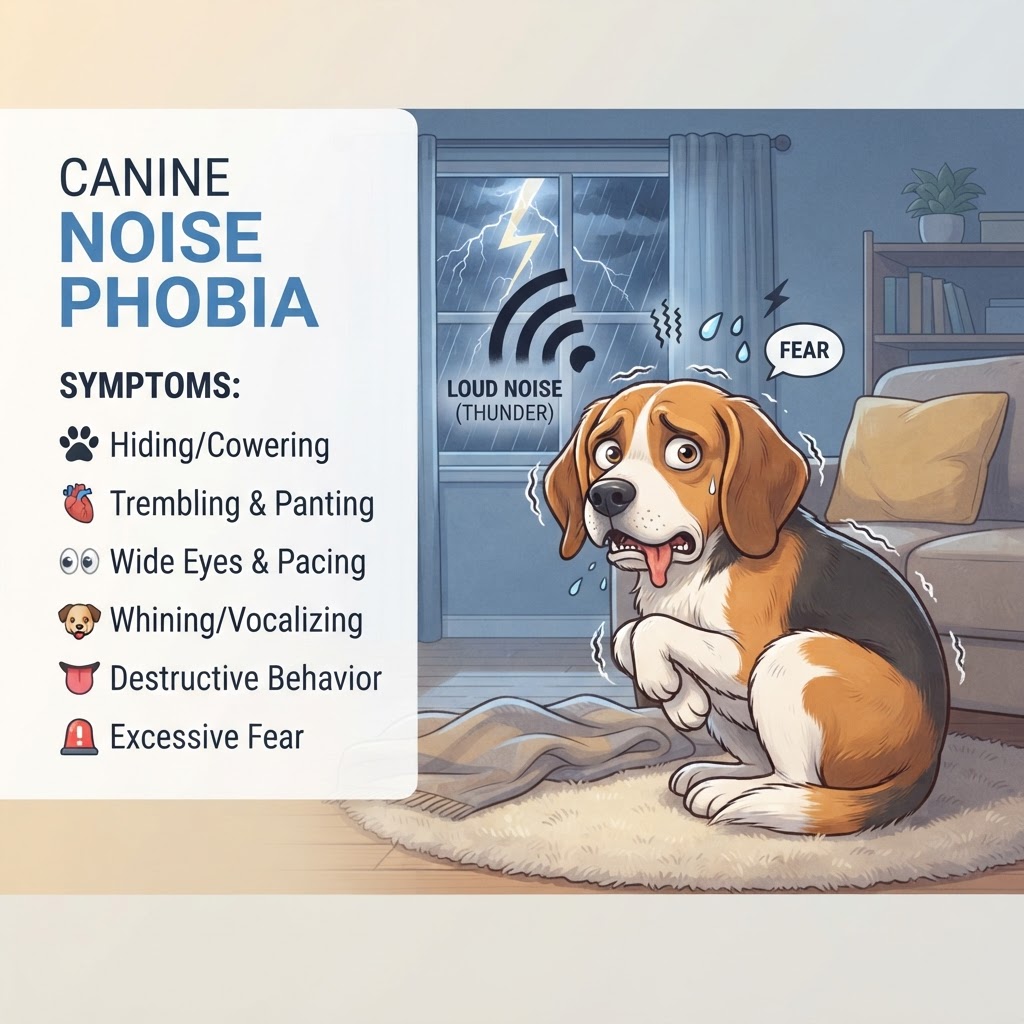
Noise phobia is a profound psychological condition where the dog perceives common environmental sounds as existential threats. This condition is not merely a preference for quiet, but a clinical disorder marked by extreme, uncontrollable panic.
The Neurobiology of Fear Responses
When a dog encounters a trigger, such as a vacuum cleaner or thunder, the amygdala initiates an immediate stress response. This overrides the dog’s cognitive function, rendering them unable to respond to standard training commands. Chronic activation of this pathway can lead to generalized anxiety, which may manifest as other behavioral issues like Excessive Barking or localized self-trauma.
Behavioral Manifestations and Clinical Signs
Owners must recognize the difference between a mild startle and a full-blown phobic event. Common signs include:
-
Trembling and shivering
-
Salivation and panting
-
Pacing or frantic escape attempts
-
Clinging behavior or excessive hiding
-
Involuntary elimination
Emergency Indicators: When Anxiety Becomes Life-Threatening
If your dog engages in repeated, high-intensity Destructive Chewing of barriers (like doors or crates) during a storm, or if they exhibit signs of heat-induced distress, this constitutes a veterinary emergency. Such panic-induced behaviors can lead to broken teeth, lacerations, and systemic shock.
Etiology: The Root of Sound Sensitivity
Phobias are rarely the result of a single event. They arise from a complex interplay between environment and biology.
Congenital Factors and Breed Predispositions
Many dogs are genetically hardwired with heightened auditory processing. Herding breeds, for instance, are often more sensitive to environmental changes. A lack of proper exposure during critical developmental windows, known as a Socialization Deficit, significantly increases the risk that a puppy will develop lasting phobias.
Clinical Diagnosis and Differential Assessments
Veterinarians diagnose noise phobia primarily through detailed behavioral history. There is no blood test for fear; therefore, clinicians must rule out underlying medical issues like neurological pain or ear infections that might make sounds painful. Differential diagnoses include Aggression stemming from resource guarding or fear-based reactivity.
Therapeutic Interventions and Management Strategies
Treatment must be multi-modal, combining environmental management, behavioral modification, and pharmacotherapy.
Pharmacological Support for Acute Events
For dogs with severe phobias, short-acting anxiolytics are often prescribed to be given before the onset of expected noises. These medications aim to lower the baseline stress response, preventing the dog from crossing the threshold into total panic.
Prevention and Long-term Management
Prevention centers on early positive exposure to a wide variety of sounds. Long-term management involves creating a 'safe zone' in the home and utilizing pheromone therapy. Owners should avoid punishing the dog, as this reinforces the association between the noise and negative consequences, potentially leading to secondary issues like Leash Reactivity.