

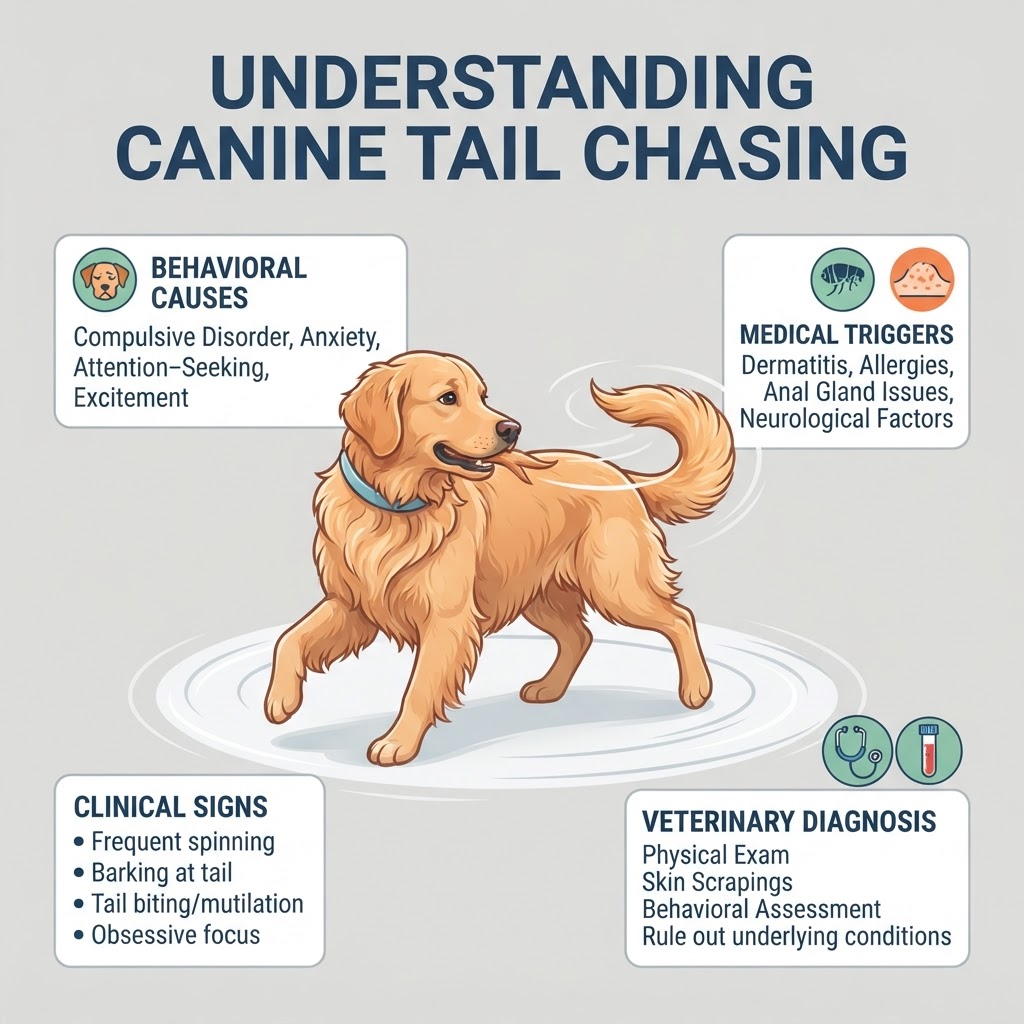
Understanding Tail Chasing and Compulsive Rituals
Tail chasing is a repetitive, stereotyped behavior in dogs where the animal spins or circles in an attempt to capture its tail. In its most severe form, this is recognized as a specific manifestation of compulsive disorder. Unlike healthy play, these rituals are often performed to the exclusion of normal activities such as eating, resting, or socializing. When the behavior becomes compulsive, the dog loses the ability to disengage from the activity voluntarily.
Neurobiological Mechanisms and Compulsive Loops
At its core, the behavior functions similarly to human obsessive-compulsive patterns. The dog enters a self-reinforcing loop where the repetitive motor act triggers the release of endogenous opioids or dopamine, which may temporarily reduce anxiety. Over time, the neurological pathways associated with this act become strengthened, making the dog increasingly likely to engage in tail chasing whenever they experience stress, boredom, or physical discomfort.
Clinical Manifestations and Behavioral Warning Signs
Recognizing the distinction between simple play and a medical behavioral condition is essential. Owners should monitor the frequency, duration, and intensity of the episodes.
Behavioral Indicators
- Spinning in tight circles for extended periods.
- Fixation on the tail while ignoring environmental cues or commands.
- Persistent inability to be distracted by food or toys.
- Episodes occurring in response to specific triggers like guests or leash reactivity.
Indicators of Physical Trauma (Emergency)
- Visible hair loss at the tail base (alopecia).
- Dermal lesions or open wounds on the tail.
- Persistent tail biting that results in bleeding.
- Signs of distress such as vocalization during the act.
Diagnostic Pathways in Veterinary Medicine
Because tail chasing can be a symptom of an underlying medical issue, a thorough veterinary physical exam is mandatory. Veterinarians must differentiate between behavioral compulsions and physical sources of irritation. Diagnostic imaging or blood panels may be required to rule out issues like flea allergy dermatitis, hip dysplasia, or neurological spinal lesions. When a dog displays acral lick patterns or other stereotypies, it may indicate a systemic or multi-focal anxiety disorder. Veterinarians often collaborate with board-certified veterinary behaviorists to reach a formal diagnosis. Differential diagnoses include parasites, anal sac disease, and even complex partial seizures, which can mimic compulsive spinning behavior.