

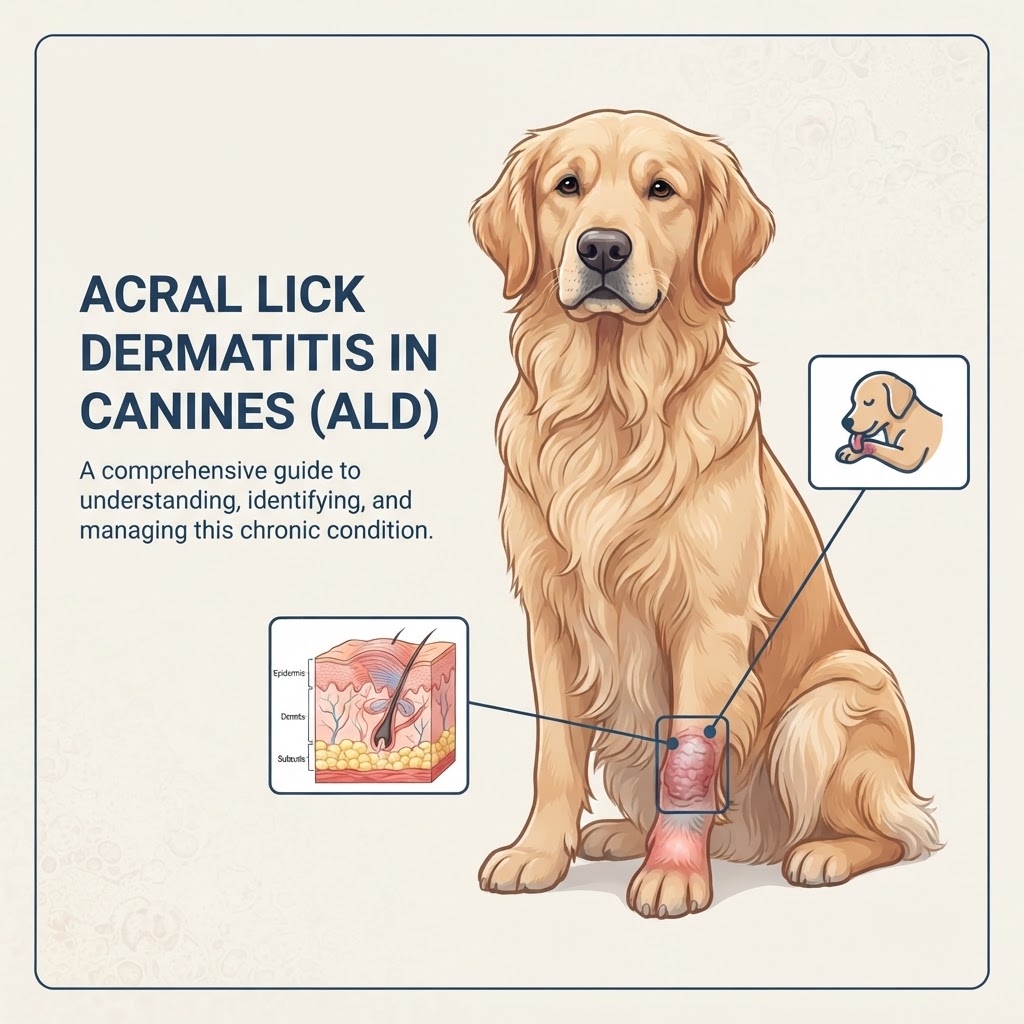
Understanding Acral Lick Dermatitis and Lick Granuloma Development
Acral Lick Dermatitis (ALD) is a localized, chronic inflammatory condition resulting from excessive, repetitive licking of the extremities. While the term 'acral' refers to the limbs, most dogs focus their attention on the dorsal surface of the front or hind paws. What begins as a reaction to a minor irritation—such as a small bug bite, a minor wound, or joint discomfort—can rapidly escalate into an entrenched behavioral pattern. This cycle is frequently classified alongside other manifestations of Compulsive Disorder, where the act of licking becomes a self-soothing mechanism.
The Pathophysiology of the Lick-Itch Cycle
Once the skin barrier is broken through constant trauma, secondary complications occur. Bacteria often invade the traumatized tissue, leading to deep pyoderma (a severe, deep-seated skin infection). As the lesion becomes infected and inflamed, it itches more, prompting even more intense licking. This creates a feedback loop that continues even if the original, mild skin irritation has long since healed. In many cases, this is exacerbated by co-morbidities like Separation Anxiety, which may increase stress levels in the pet when left alone, leading to increased self-directed grooming.
Clinical Manifestations and Recognizing Warning Signs
Recognizing ALD early is essential for preventing the formation of deep, fibrous granulomas that are resistant to treatment. Pet owners should be vigilant for signs of excessive grooming behavior directed at the paws.
Signs of Early-Stage Lesions
- Localized thinning of the fur (alopecia) on the distal limb.
- Persistent, focused licking of one specific area while the dog is resting or stressed.
- Redness or moist skin surface (erythema) at the site of licking.
Signs of Chronic, Advanced Granulomas
- Raised, firm, ulcerated plaques of thick, hardened tissue.
- Darkening of the skin (hyperpigmentation) and thickened, leathery texture.
- Visible secondary bleeding or pus discharge.
- Lameness or reluctance to move, suggesting deep tissue pain that may be confused with Noise Phobia causing general anxiety-related symptoms.
Diagnostic Pathways in Veterinary Medicine
Because ALD is a multifactorial condition, veterinarians typically follow a systematic diagnostic process to rule out underlying triggers that might mimic or worsen the behavior.
The Diagnostic Evaluation Process
- Physical Exam and Cytology: The veterinarian will assess the lesion for deep bacterial or fungal infections using impression smears or skin scrapings.
- Radiography and Orthopedic Evaluation: Since chronic joint pain is a known trigger, imaging of the limb is vital to rule out arthritis or fractures. If pain is identified, the behavior may be linked to a physical sensation that has since become a habit.
- Biopsy: In chronic, non-responsive cases, a biopsy is necessary to rule out neoplasia or deep parasitic infestations like demodicosis, which can mimic the clinical appearance of a lick granuloma.
Multimodal Treatment and Behavioral Modification
Successfully managing ALD requires addressing the lesion, the infection, and the psychological state of the dog. A 'quick fix' rarely exists for a behavior that has become deeply ingrained.
Therapeutic Modalities
- Topical and Systemic Antibiotics: Treating secondary pyoderma is the first step. Long courses of antibiotics are often required to penetrate deep into the lesion.
- Pain Management: Non-steroidal anti-inflammatory drugs (NSAIDs) or neuropathic pain relievers can reduce the physical discomfort that might be fueling the licking.
- Behavioral Therapy: Incorporating strategies used for Socialization Deficit or managing Leash Reactivity, such as increased mental enrichment, can help redirect the dog's focus away from the limb.
- Pharmacological Support: SSRIs or tricyclic antidepressants may be prescribed if the behavior is categorized as an established compulsive disorder.
Surgical and Interventional Approaches
While surgical removal of a granuloma was common in the past, it is now reserved for specific, non-healing, or neoplastic cases, as the wound healing process is often complicated by the dog's tendency to continue licking the surgical site. Laser therapy and cryotherapy are more modern, non-invasive alternatives used to reduce inflammation and promote healing without the risks associated with traditional excisional surgery.
