

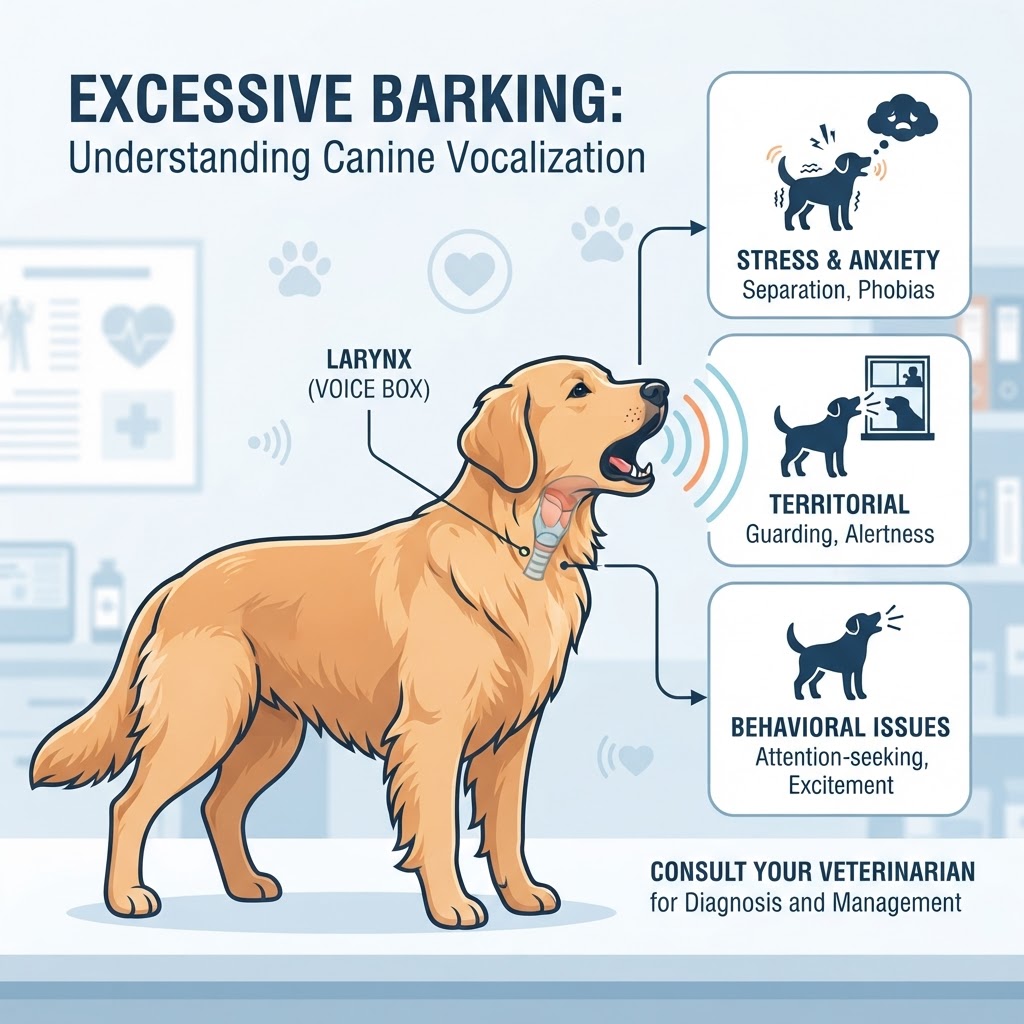
Understanding Vocalization Pathologies in Canines
Excessive barking refers to repetitive vocalization that deviates from the normal communication patterns of a domesticated canine. While some breeds, such as terriers and hounds, are genetically predisposed to higher vocal frequency, pathological barking occurs when the volume, duration, or context of the vocalization creates significant disruption to the household or suggests an inability to regulate emotional states. It is critical to classify these behaviors into distinct functional categories, including alarm barking, demand barking, and distress-induced vocalization.
Etiology and Behavioral Drivers
Understanding why a dog barks requires an analysis of the environmental triggers and the internal emotional state of the animal. Many cases originate from a Socialization Deficit, where the lack of proper environmental exposure leads to heightened fear responses toward novel stimuli. Other dogs develop vocalization patterns as a manifestation of Separation Anxiety, where barking serves as a cry for social reattachment in the owner's absence.
Environmental and Genetic Predispositions
Certain dogs exhibit heightened reactivity to auditory or visual stimuli, potentially escalating into a Noise Phobia. In such instances, the barking is an involuntary stress response rather than a learned behavior. Furthermore, when left unaddressed, persistent vocalization can morph into a Compulsive Disorder, where the act of barking becomes a ritualistic activity performed to mitigate internal conflict.
Clinical Diagnostic Assessment
Veterinarians approach barking through a systematic diagnostic process. First, physical pathology—such as pain, hearing impairment, or neurological dysfunction—must be excluded. Following a clear bill of health, the clinician conducts a behavioral history review to map the frequency and triggers of the vocalizations. This may involve the use of video recordings provided by owners to assess the dog’s behavior during isolation, differentiating between boredom, fear, and attention-seeking.
Therapeutic Intervention Strategies
Effective management relies on a multifaceted approach. Medication, such as selective serotonin reuptake inhibitors or tricyclic antidepressants, may be indicated in cases of severe anxiety to lower the dog's baseline reactivity. Behavior modification focuses on desensitization and counter-conditioning. For example, if a dog displays Leash Reactivity accompanied by barking, the training focus shifts toward changing the dog's emotional response to the trigger rather than merely suppressing the sound. If the barking manifests as Aggression, a referral to a board-certified veterinary behaviorist is strongly recommended to ensure safety.
Prognosis and Management Timeline
Recovery from excessive barking is rarely instantaneous. It requires consistency, patience, and a long-term commitment to modifying the home environment. By addressing the root cause, such as increasing mental enrichment or providing structured exercise, most owners see significant improvements in the dog’s emotional stability and vocalization frequency within several months of dedicated training.
