

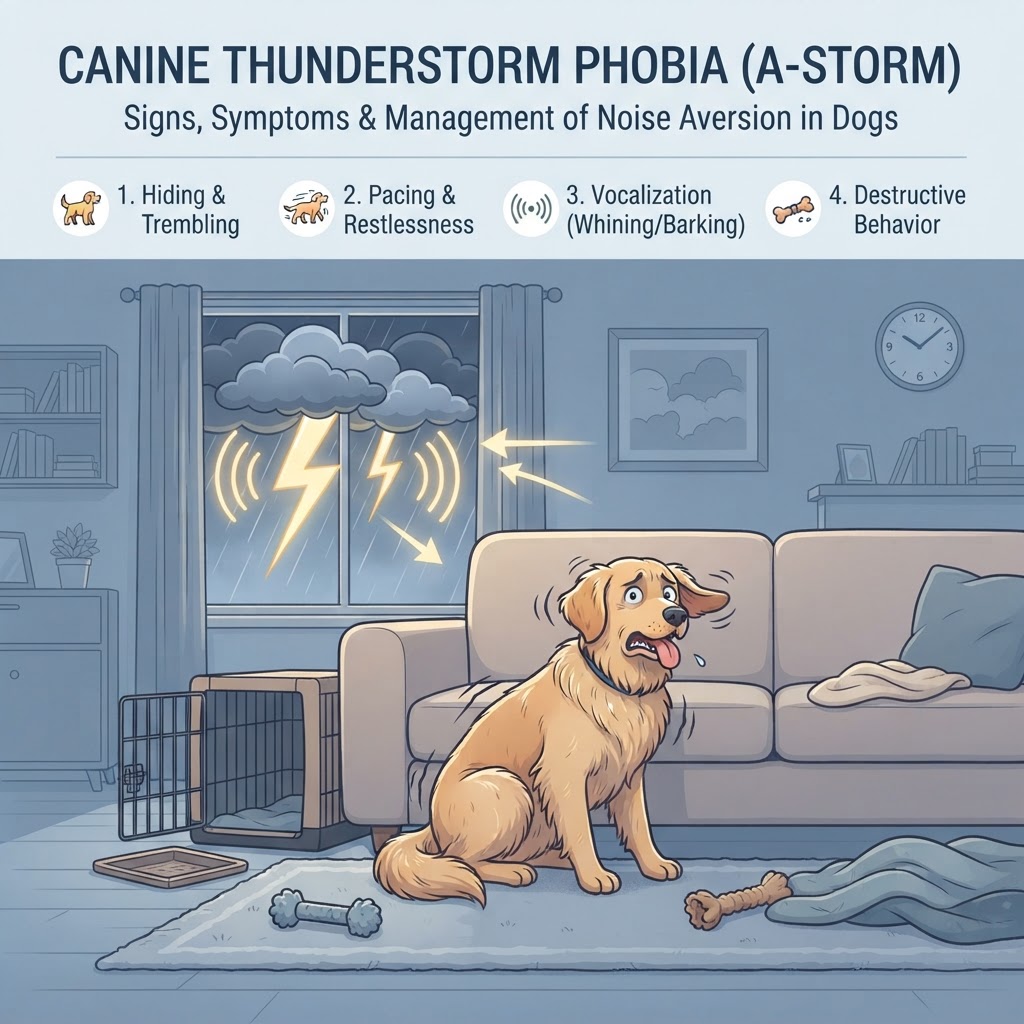
Understanding Astraphobia and Atmospheric Sensitivities in Canines
Thunderstorm phobia is not simply a dog being 'scared of loud noises'; it is a profound behavioral disorder triggered by a combination of sensory inputs. Dogs possess auditory and tactile sensitivities far exceeding those of humans, allowing them to detect the low-frequency rumbles of distant thunder long before they are audible to their owners. Additionally, they are highly sensitive to drops in barometric pressure and the accumulation of static electricity in their fur, which can cause significant physical discomfort.
The Neurobiology of Fear Responses
When a storm approaches, a dog in an anxious state initiates a cascade of stress hormones. This neurochemical shift makes it difficult for the animal to process commands or rationalize their environment. Prolonged exposure to these high-stress events can trigger secondary behaviors such as Destructive Chewing, as the dog frantically attempts to escape perceived danger. In severe cases, owners may note redirected Aggression toward other pets or humans if the dog feels cornered during an episode.
Clinical Manifestations and Behavioral Indicators
Recognizing the early signs of storm distress is critical for effective management. Owners often mistake early signs for simple irritability or naughtiness. However, distinguishing a phobic reaction from common Excessive Barking or general misbehavior is vital for selecting the correct therapeutic approach.
Behavioral Red Flags
-
Pacing and Restlessness: An inability to settle or find a comfortable spot.
-
Hiding Behavior: Seeking out dark, enclosed spaces like bathrooms, closets, or basements.
-
Autonomic Nervous System Indicators: Excessive panting, drooling, and dilated pupils.
-
Vocalizations: Persistent whining, howling, or distressed barking.
Warning Signs of Crisis
If the dog begins to engage in self-injury, such as tearing at claws, breaking teeth on crates, or attempting to jump through windows, this is a psychiatric emergency. Continued exposure to these levels of panic can lead to the development of Compulsive Disorder where the animal may begin to perform repetitive behaviors even when no storm is present.
Etiology: Why Dogs Develop Fear of Weather
While the exact cause remains idiopathic in many cases, it is likely a combination of genetic predisposition and early life experiences. A Socialization Deficit during the critical puppy developmental phase can lead to a dog being less resilient to sudden environmental changes. Some breeds, particularly working and herding lines, seem more prone to noise sensitivities.
The Veterinary Diagnostic Pathway
Veterinarians approach storm phobia as a medical issue first. A physical examination is conducted to rule out underlying pain or neurological conditions that might exacerbate anxiety. Standard blood work (CBC/Chemistry) is typically performed to ensure the dog is healthy enough for potential psychoactive medications. Your veterinarian may also ask for a behavioral log to differentiate between phobia and other triggers, such as separation anxiety or Travel Anxiety.
Differential Diagnoses
-
Separation Anxiety: Often occurs when owners are absent, whereas storm phobia occurs regardless of presence.
-
Generalized Anxiety Disorder: Persistent anxiety rather than event-specific.
-
Neurological Pain: Conditions like arthritis or dental pain can manifest as restlessness that mimics anxiety.
Therapeutic Interventions and Management Strategies
Managing thunderstorm phobia involves a multi-pronged approach combining environmental modification and pharmacological support. Treatment is rarely 'cured' but rather managed.
Pharmacological Management
-
Anxiolytics: Medications such as Trazodone or Gabapentin are frequently prescribed to lower the overall anxiety threshold during storm events.
-
Maintenance SSRIs: For severe, chronic cases, daily medications like Fluoxetine can help stabilize the dog's baseline mood.
Behavioral Modification
-
Desensitization: Gradually exposing the dog to recorded storm sounds at low volumes while pairing them with high-value treats.
-
Counter-Conditioning: Changing the emotional response from fear to anticipation of a reward.
-
Safe Zone Creation: Providing an interior room with sound-dampening materials and a comfortable 'thundershirt' or compression wrap.