

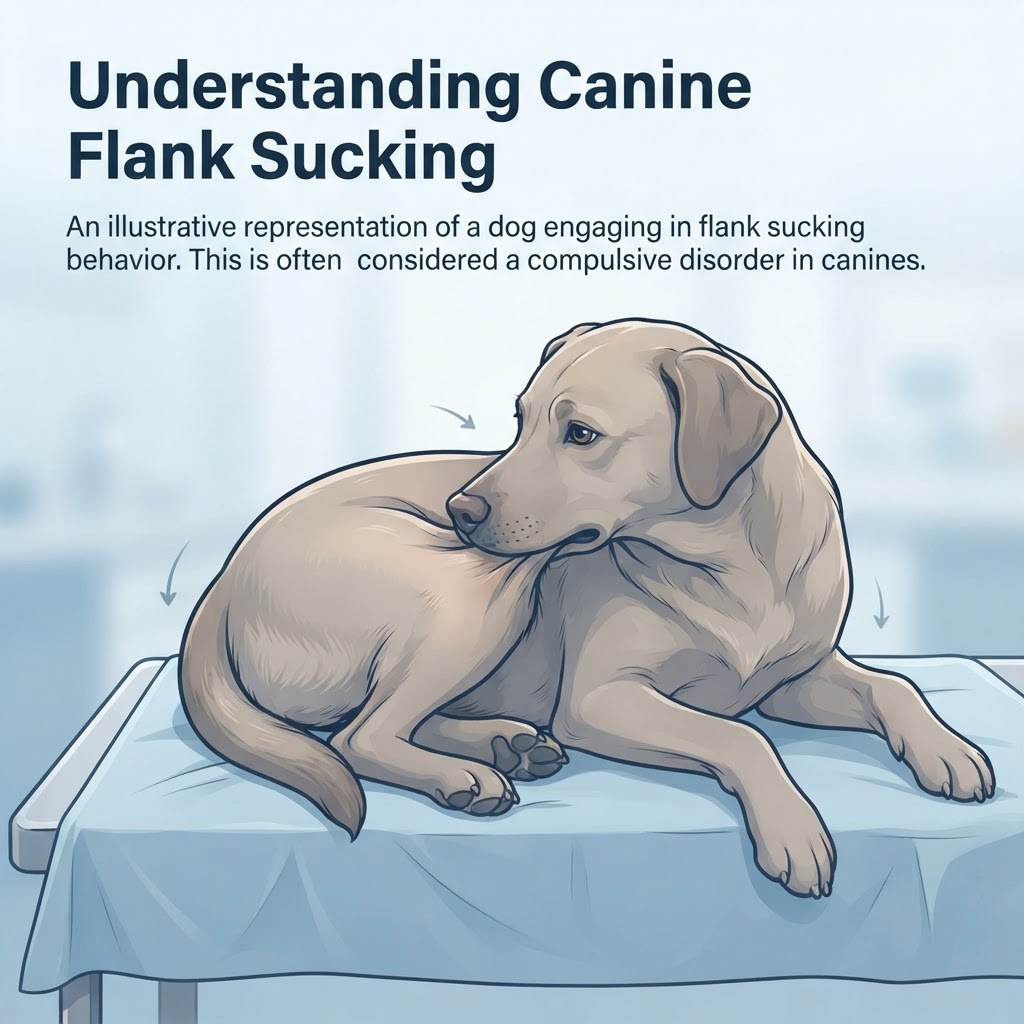
Understanding Canine Flank Sucking (Compulsive Oral-Tactile Rituals)
Flank sucking is a complex behavioral manifestation that falls under the umbrella of canine Compulsive Disorder. It is not merely a 'bad habit' but a neurobehavioral condition where the animal engages in fixed-action patterns that appear disconnected from the original goal of grooming. These behaviors are typically rhythmic, repetitive, and performed in a way that is disproportionate to the context, often indicating an underlying Socialization Deficit or chronic environmental instability.
Neurobiological Basis and Behavioral Triggers
The etiology of flank sucking is multifactorial, involving an interaction between biological vulnerability and environmental stress. Research suggests that dogs exhibiting these traits may have alterations in neurotransmitter activity similar to humans with obsessive-compulsive spectrum disorders. When a dog experiences high levels of anxiety—perhaps due to Separation Anxiety or Noise Phobia—the flank sucking acts as a self-soothing mechanism that triggers the release of endorphins. This creates a feedback loop, reinforcing the behavior over time.
Identifying Clinical Symptoms and Secondary Lesions
Recognizing the condition early is vital to prevent permanent tissue damage. Owners often observe the dog tucking its nose into the flank area, followed by sustained, rhythmic mouthing.
Physical Manifestations of Chronic Sucking
-
Localized alopecia (hair loss) on the lateral flank.
-
Saliva staining and matting of the fur.
-
Chronic erythema (redness) of the underlying epidermis.
-
Skin thickening or lichenification from constant moisture and friction.
-
Potential secondary bacterial infections or yeast overgrowth.
When to Call the Veterinarian
While the behavior itself is rarely life-threatening, it can progress to severe self-mutilation. If you observe broken skin, deep ulcerations, or the dog becoming aggressive if redirected, contact your veterinarian immediately to discuss potential management strategies.
Diagnostic Pathways in Behavioral Medicine
Veterinarians must first exclude organic medical causes before confirming a behavioral diagnosis. Because skin lesions can mimic allergies or parasites, the diagnostic workup is exhaustive.
Differential Diagnostic Protocols
- Dermatological exam: Skin scrapings and cytology to rule out ectoparasites, dermatophytosis, or pyoderma.
- Blood panels: Evaluating thyroid function and overall systemic health.
- Orthopedic evaluation: Radiographs of the spine or hips if the sucking appears linked to potential discomfort or chronic pain.
Management and Treatment Modalities
A successful treatment plan for flank sucking involves a holistic approach.
Pharmacological Intervention
Selective Serotonin Reuptake Inhibitors (SSRIs) such as fluoxetine or clomipramine are frequently used to raise the threshold for the compulsive behavior. These medications should only be administered under strict veterinary supervision.
Behavioral Modification and Environmental Enrichment
-
Implementing strict feeding and play schedules to provide predictability.
-
Using puzzle feeders and cognitive enrichment to reduce boredom.
-
Increasing physical exercise, provided it does not exacerbate the dog's Leash Reactivity.
-
Addressing underlying Travel Anxiety if the behavior manifests during movement-heavy phases of life.