

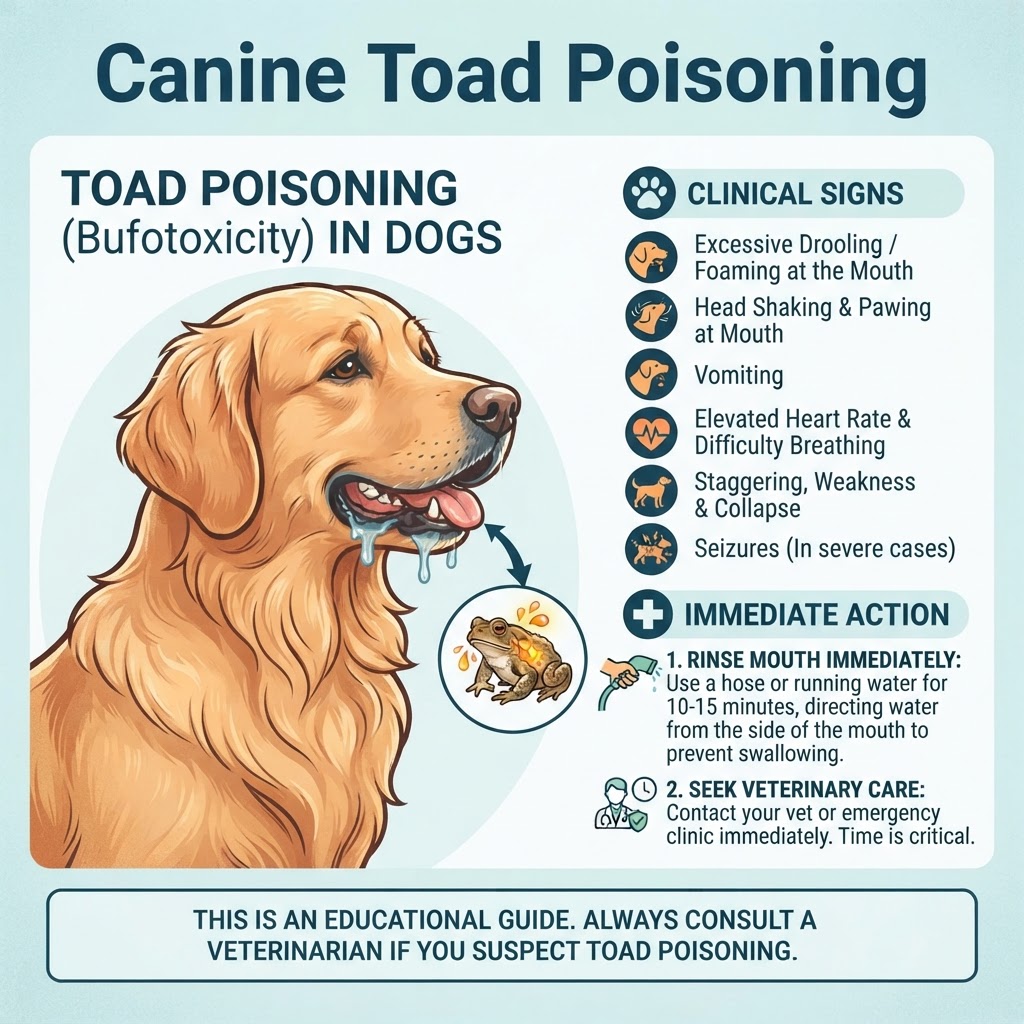
Understanding Bufotoxin Exposure and Oral Envenomation
Toad poisoning occurs when a canine comes into direct contact with the toxic secretions of specific toad species. The most significant offenders are the Cane Toad (Bufo marinus) and the Colorado River Toad (Incilius alvarius). When a dog bites, mouths, or licks these amphibians, the parotoid glands located behind the eyes release a milky, highly toxic substance. This substance is rapidly absorbed through the mucous membranes of the dog’s mouth, esophagus, and stomach, resulting in a condition that mimics severe electric shock in its sudden onset and neurological impact.
The Mechanism of Bufo Toxin
The toxin contains bufadienolides, which are cardiac glycosides. These chemicals interfere with the sodium-potassium pump in cell membranes, specifically affecting the cardiac muscle. Unlike an insect sting, which often causes localized inflammatory response, toad toxin acts as a potent stimulant to the central nervous system while simultaneously destabilizing cardiac rhythm. It is a true medical emergency that differs vastly from common bite wounds in its systemic rather than localized nature.
Recognizing Clinical Signs of Toad Toxicity
Recognizing the signs of toad poisoning early is critical for survival. Owners often notice the dog acting abnormally near areas where amphibians congregate, such as damp gardens or ponds. If the toxin has been ingested, the clinical signs usually appear within seconds to minutes.
Immediate Oral and Neurological Symptoms
-
Profuse, ropey hypersalivation (foaming at the mouth)
-
Bright red (brick red) mucous membranes
-
Head shaking, pawing at the mouth, or whining
-
Ataxia (stumbling or loss of coordination)
-
Hyperthermia (elevated body temperature)
Indicators of Systemic Crisis
-
Seizures or tremors
-
Cardiac arrhythmias (irregular or racing heartbeat)
-
Cyanosis (bluish tint to gums in late stages)
-
Respiratory distress or gasping
-
Collapse and loss of consciousness
If you suspect exposure, do not wait for the symptoms to worsen. Much like a crush injury, the damage is progressive. If your dog exhibits tremors or seizures, you must transport them to the nearest emergency clinic immediately, as this indicates the toxin has crossed the blood-brain barrier.
Diagnosis and Clinical Assessment
Veterinarians diagnose toad poisoning primarily through a history of potential exposure and the characteristic clinical presentation. There is no specific 'toad toxin' blood test available, so the diagnosis is based on physical findings such as the tell-tale brick-red gums and cardiac abnormalities. A veterinarian will perform a full physical exam, monitor the heart via EKG to detect arrhythmias, and check blood pressure. While this condition is not a wound infection, it shares the need for rapid stabilization and close monitoring.
Treatment and Life-Saving Interventions
The first step in treatment is thorough irrigation of the mouth. The owner should use a damp cloth or a gentle stream of water to flush the tongue, gums, and teeth to remove any residual toxin. This must be done carefully to ensure the dog does not aspirate water. Once at the clinic, the veterinarian will administer:
- Cardiac Support: Anti-arrhythmic medications to stabilize the heart rate.
- Sedation or Anti-convulsants: To manage seizures and tremors.
- Intravenous Fluids: To maintain blood pressure and help flush toxins from the system.
- Supportive Care: Monitoring in a hospital setting until cardiac stability is achieved.
Unlike cases of drowning (near) where the primary issue is respiratory, the focus here is cardiac and neurological stabilization. In severe instances, hospitalization may last several days until the dog's cardiac rhythm returns to a sinus rhythm.
Prevention and Long-Term Management
To prevent toad poisoning, keep your dog on a leash during dusk and dawn hours, which are the peak activity times for these amphibians. Ensure your yard is free of standing water and potential hiding spots like dense brush or stacks of wood. Installing toad-proof fencing can be a deterrent. If you live in an endemic area, keep a garden hose accessible near your back door so you can immediately irrigate your dog's mouth if you suspect an encounter. Regular monitoring of your dog's behavior in the yard is the most effective form of prevention.
