

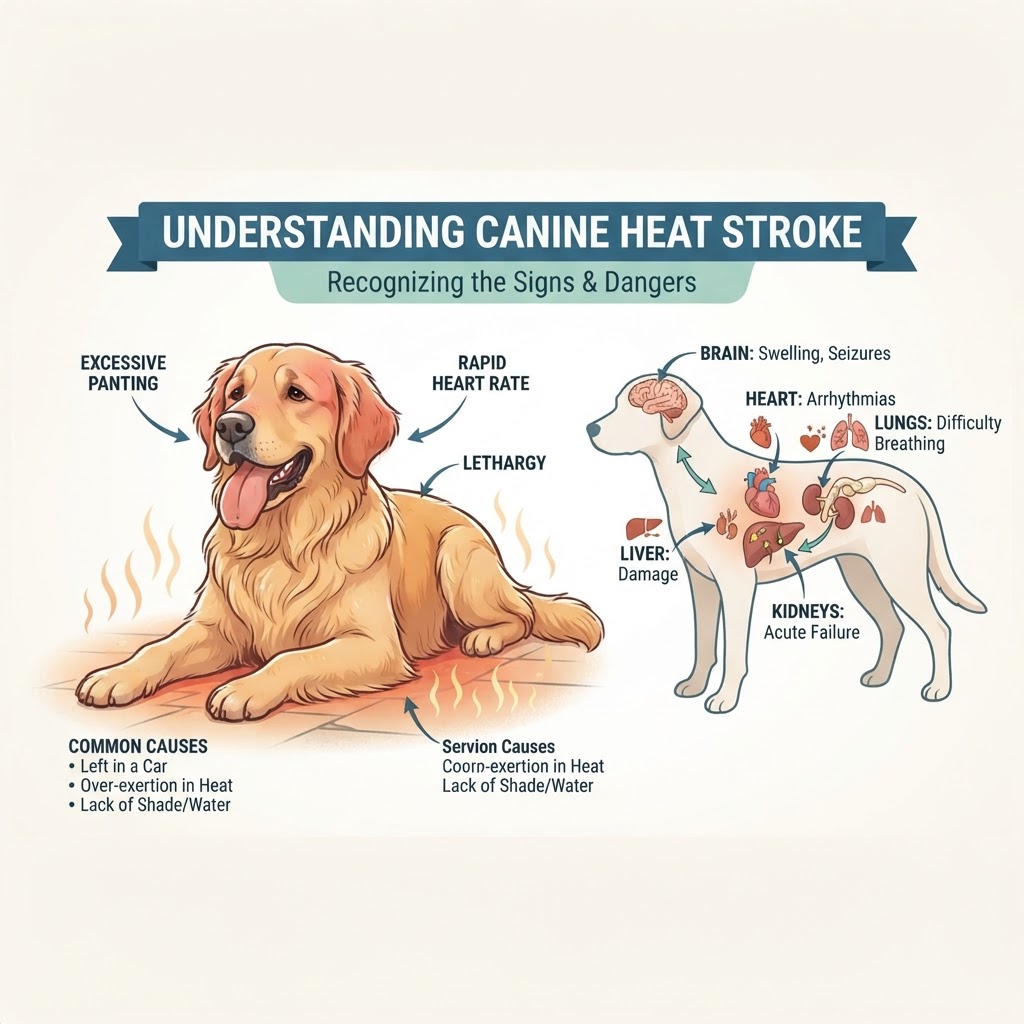
Understanding Canine Heat Stroke and Hyperthermia
Heat stroke is an acute medical emergency resulting from the failure of the thermoregulatory system. In dogs, heat dissipation is limited by their physiological design, making them significantly more prone to overheating than humans. When the internal core temperature rises above 106°F (41.1°C), cellular components begin to breakdown, leading to severe systemic dysfunction.
The Pathophysiology of Thermal Injury
When a dog is exposed to extreme temperatures or performs strenuous activity without adequate cooling, the body enters a hyperthermic state. This is distinct from a fever, which is a controlled immune response; heat stroke is an uncontrolled rise in body temperature that leads to systemic cellular death. The process often starts with tachycardia (elevated heart rate) and tachypnea (rapid breathing) as the body attempts to dump heat. If unsuccessful, the brain, heart, and gastrointestinal tract—which is lined with sensitive bacteria—suffer ischemic injury as blood is shunted away from internal organs to the skin.
Clinical Indicators and Emergency Warning Signs
Recognizing the early signs of heat-related illness is critical for survival.
Early Warning Signs
- Excessive, frantic panting
- Drooling thick or sticky saliva
- Bright red or brick-red gums
- Difficulty walking or signs of disorientation
Signs of Severe Progression (Emergency)
- Seizures or muscle tremors
- Collapse and loss of consciousness
- Vomiting or diarrhea, often with blood
- Bruising on the belly (petechiae) indicating coagulopathy
Contributing Factors and Risk Predispositions
While any dog can succumb to heat stroke, certain factors significantly heighten the danger. Brachycephalic (short-nosed) breeds are at extreme risk because their anatomy makes efficient panting almost impossible.
Environmental and Physiological Drivers
- Ambient Temperature and Humidity: High humidity prevents moisture from the tongue and lungs from evaporating, rendering panting useless.
- Confinement: Being left in a car or poorly ventilated area is the most frequent cause of preventable heat stroke.
- Breed-Specific Risks: Bulldogs, Pugs, and Boston Terriers suffer from narrow airways that limit air intake for cooling.
- Underlying Health Status: Dogs with heart disease, obesity, or those taking certain medications (such as some diuretics) have lower tolerance to heat.
Diagnostic Protocols in the Veterinary Clinic
Veterinarians perform an immediate physical exam to assess core temperature and hydration status.
Laboratory Diagnostics and Monitoring
- Rectal Thermometry: The gold standard for assessing the true core body temperature.
- Blood Gas and Electrolyte Panels: Used to identify metabolic acidosis and electrolyte imbalances that occur as the dog stops breathing effectively.
- Coagulation Profiles: To check for the onset of DIC, a deadly complication where blood fails to clot or clots inappropriately.
Therapeutic Intervention and Supportive Care
Treatment focuses on the controlled reduction of temperature and the management of secondary injuries.
Active Cooling and Medical Stabilization
- Fluid Resuscitation: Intravenous fluids are essential to replace lost volume, maintain blood pressure, and protect kidney function.
- Controlled Cooling: Applying cool water to the extremities and using fans to promote evaporation. Iced water is generally avoided to prevent peripheral vasoconstriction.
- Organ Support: Depending on the severity, medications to prevent seizures, manage heart arrhythmias, and protect the stomach lining from ulceration may be required.
Preventing Heat-Related Crisis
Prevention is the most effective "cure" for heat stroke. Owners must remain vigilant, especially during summer months.
Seasonal Safety Strategies
- Scheduled Activity: Only exercise dogs in the early morning or late evening.
- Environmental Awareness: Never leave a dog in a parked car, even with windows cracked, as internal temperatures can rise to 120°F in minutes.
- Access to Cooling: Always provide shade and cool, fresh water. If the environment feels hot to the human, it is likely too hot for the dog.
