

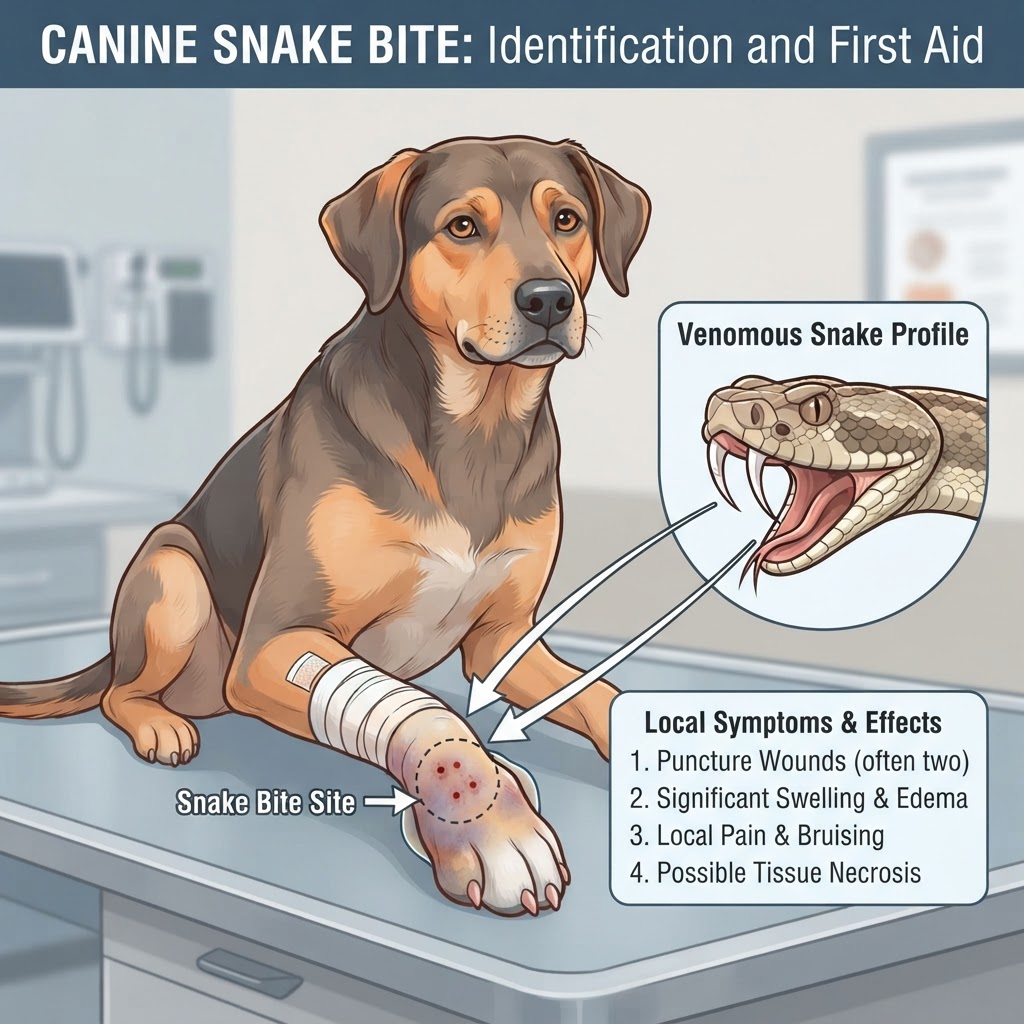
Understanding Snake Envenomation Syndromes
Hemotoxic vs. Neurotoxic Venom Mechanisms
Snake bites represent a significant trauma in canine patients, categorized by the type of venom injected. Hemotoxins, primarily found in Crotalinae species (rattlesnakes, copperheads, cottonmouths), lead to aggressive tissue degradation, local inflammatory response, and systemic clotting failure. Neurotoxins, characteristic of elapids (coral snakes), function by disrupting neuromuscular junctions, which creates a syndrome that mimics certain aspects of Electric Shock in its potential to cause sudden, life-threatening paralysis.
Identifying Clinical Signs of Snake Bites
Localized Tissue Indicators
Owners should inspect for two distinct puncture marks, though these can be obscured by hair or rapidly spreading edema. The swelling is often disproportionate to the size of the wound and can cause significant pressure on underlying tissues, potentially leading to a Crush Injury effect where circulation is compromised.
Systemic Warning Signs
-
Acute lethargy and collapse
-
Profuse salivation (common with neurotoxic bites)
-
Respiratory distress
-
Mucous membrane pallor
-
Tremors or muscle fasciculations
-
Vomiting or diarrhea
Diagnostic Pathways in Emergency Veterinary Medicine
Laboratory Assessment of Coagulation
Veterinarians must perform a complete blood count (CBC) and a coagulation profile. Prolonged prothrombin time (PT) and partial thromboplastin time (PTT) are hallmark indicators of pit viper envenomation. Unlike a minor Insect Sting, snake bites require careful monitoring for secondary complications like compartment syndrome.
Physical and Diagnostic Imaging
Physical exams focus on locating the strike site and grading the severity of the edema. In some cases, radiographs may be used if the trauma involved other mechanisms, similar to evaluating Gunshot Injury or Joint Luxation resulting from the panic of the strike. However, the most vital diagnostic tool remains serial physical examinations to monitor the advancement of swelling.
Strategic Treatment and Supportive Care
Antivenom Administration
The cornerstone of treatment is the administration of species-specific antivenom. This product neutralizes circulating venom proteins, halting the progression of damage. While expensive, it is the only definitive treatment for systemic envenomation. Supportive care must also include intravenous fluids to maintain perfusion and opioid analgesics for pain management.
Wound and Complication Management
Following the administration of antivenom, the veterinary team manages the local site as they would Burn Wounds, keeping the area clean to prevent secondary bacterial infection. Necrotic tissue may require surgical debridement if the bite leads to a massive Degloving Injury style of skin sloughing.
Long-Term Recovery and Preventive Strategies
The Road to Full Recovery
Most dogs require hospitalization for 24 to 72 hours. During this time, they are monitored for rebound effects or the development of late-stage clotting disorders. Home care focuses on strictly limiting activity to prevent the spread of venom-induced inflammation.
Proactive Prevention
-
Maintain short grass in backyard areas
-
Clear brush and debris piles to reduce habitat
-
Keep dogs on leashes while hiking in endemic areas
-
Consider snake avoidance training provided by professional dog trainers
