

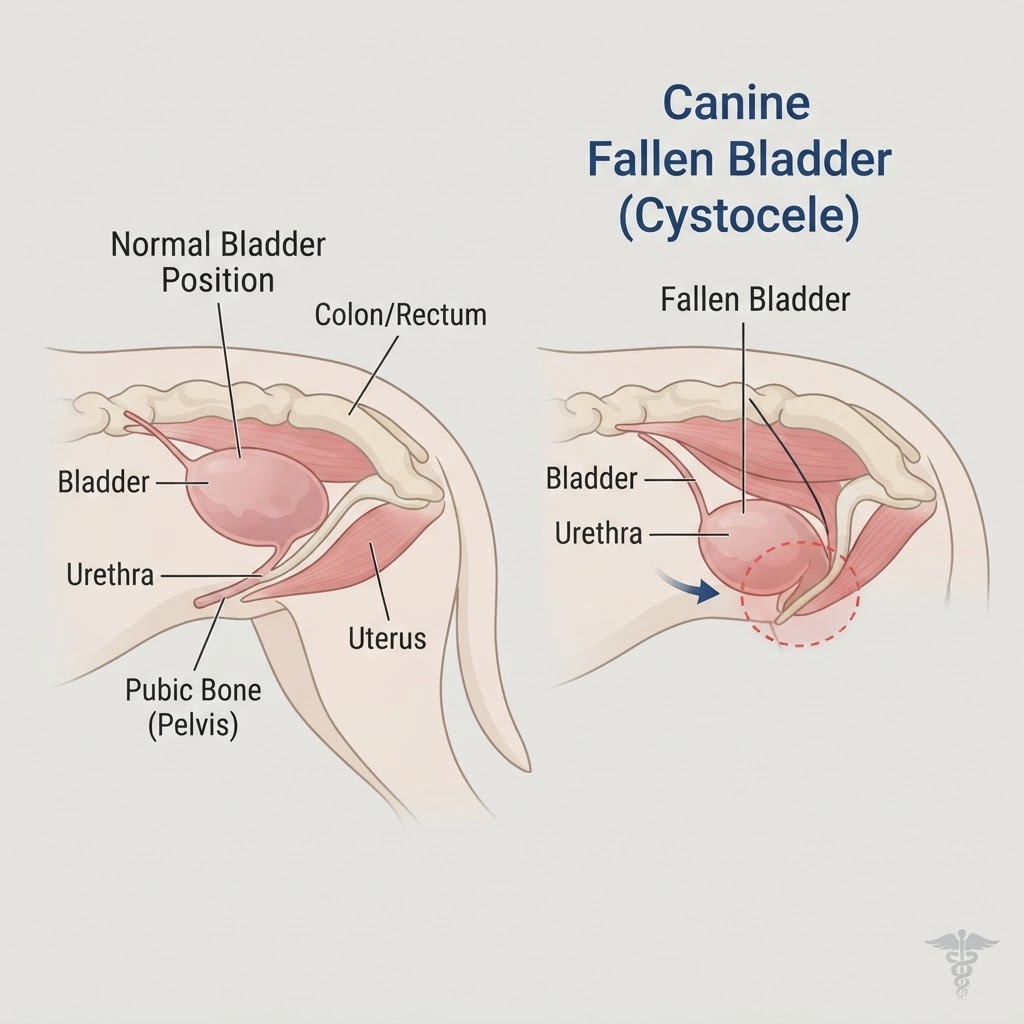
Understanding Traumatic Vesicular Rupture (The Fallen Bladder)
In veterinary medicine, a 'fallen bladder' is a colloquial term describing a ruptured urinary bladder. This occurs when the bladder wall is punctured or tears due to blunt abdominal trauma. The bladder is a highly elastic organ, but during a crush injury, the pressure within the bladder can exceed the structural integrity of its tissue, leading to leakage.
Mechanisms of Uroabdomen
When the bladder ruptures, urine, which is normally sterile and designed for excretion, enters the sterile abdominal cavity. This induces a severe inflammatory response. The absorption of nitrogenous waste and potassium from the urine leads to uremic poisoning and cardiac arrhythmias. If the patient has also suffered other injuries, such as bite wounds or degloving injury, these may complicate the clinical picture, often masking the severity of the internal bladder damage.
Clinical Indicators of Bladder Trauma
Recognizing the signs of a ruptured bladder requires vigilance, especially following any significant accident. While the dog may be in shock from a gunshot injury or blunt force, owners should watch for specific urinary changes.
Classic Symptoms
-
Difficulty or straining to urinate (dysuria)
-
Anuria (total inability to produce urine)
-
Abdominal pain and guarding
-
Distended, painful abdomen
-
Lethargy and vomiting
-
Pale mucous membranes
Identifying Complications
If the abdomen feels like a fluid-filled balloon (ascites) and the dog has not urinated in several hours, this is a sign of a wound infection risk or, more likely, a ruptured bladder. Any suspicion of this requires immediate triage.
Diagnostic Pathways for Uroperitoneum
Veterinarians utilize several diagnostic tools to identify a ruptured bladder. Initial physical examination focuses on stability and pain levels. Imaging, particularly ultrasound or contrast radiography (cystography), is the gold standard for locating the site of the tear. Blood chemistry panels are also essential to monitor electrolyte levels, which provide a definitive warning of urine leakage into the abdominal space.
Surgical Intervention and Stabilization
Management of a ruptured bladder involves aggressive fluid therapy to correct electrolyte imbalances followed by surgical repair. A celiotomy (abdominal exploration) is performed to clean the abdominal cavity of urine and debride the edges of the bladder tear. The bladder is then sutured closed, and the abdomen is lavaged with sterile saline to prevent secondary peritonitis. In some instances, the bladder may have suffered from a burn wound internally due to extreme chemical shifts, though this is rare compared to mechanical tearing.
