

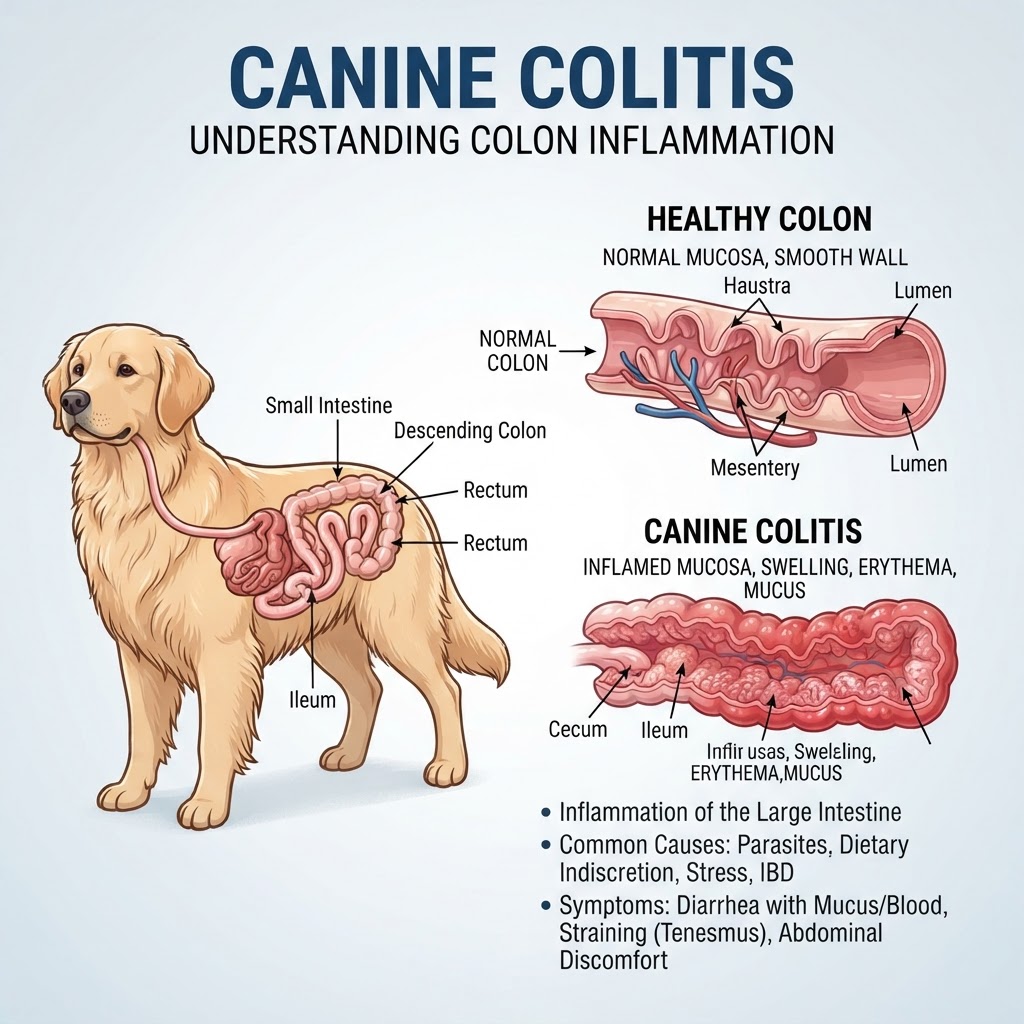
Understanding Large Bowel Inflammation (Colitis) in Dogs
Colitis is fundamentally defined as the inflammation of the colon, the segment of the digestive tract responsible for final water absorption and feces storage. When the colonic mucosa is irritated, it loses its ability to absorb fluid effectively, leading to the production of abnormal stools. It is often distinguished from small bowel enteritis by the distinct character of the fecal matter.
Acute vs. Chronic Colonic Irritation
Acute colitis is often a transient event linked to dietary indiscretion—commonly known as 'garbage gut'—where a dog consumes something irritating. Chronic colitis persists for more than 2-3 weeks and often requires extensive diagnostic work to differentiate from protein-losing enteropathy or malabsorptive syndromes like exocrine pancreatic insufficiency (EPI). In some cases, chronic irritation may mask other systemic issues that mimic a gastrointestinal obstruction.
Clinical Manifestations and Recognizing Warning Signs
Recognizing the subtle signs of colitis is crucial for timely intervention. Owners should observe the frequency, consistency, and presence of foreign materials in the stool.
Hallmark Signs of Colonic Distress
-
Frequent, urgent bowel movements
-
Straining to defecate (tenesmus)
-
Fresh red blood in the stool (hematochezia)
-
Excessive mucus coating on feces
-
Small volume stools compared to normal output
When Colitis Becomes an Emergency
While common colitis is often manageable, symptoms such as lethargy, persistent vomiting, or extreme weakness indicate a more severe condition, such as hemorrhagic gastroenteritis. If your dog stops drinking water or exhibits signs of abdominal pain, immediate veterinary attention is required.
Diagnostic Approaches for Colonic Evaluation
Veterinarians approach colitis through a stepwise process, starting with a thorough history and physical exam to assess for signs of dehydration or systemic illness.
Fecal Analysis and Parasitology
Initial testing often involves a fecal float and direct smear to rule out common intestinal parasites, which are a frequent cause of large bowel inflammation in younger dogs.
Advanced Imaging and Endoscopy
If the condition is chronic, your veterinarian may suggest abdominal ultrasound to visualize the colonic wall thickness. In complex cases, a colonoscopy allows the vet to take biopsies to rule out inflammatory bowel disease or other infiltrative conditions. While it is rarely associated with a gastric ulcer, ruling out diffuse GI disease is standard procedure.
Therapeutic Management and Dietary Support
Treatment is directed by the underlying cause but generally focuses on calming the intestinal tract and restoring mucosal integrity.
Pharmacological Interventions
Commonly, vets prescribe anti-inflammatory medications, probiotics to restore gut flora, and sometimes fiber-heavy diets to bulk up the stool. If an infection is suspected, metronidazole or other antibiotics may be utilized to modulate the colonic environment.
Long-Term Dietary Strategies
Many dogs with chronic colitis benefit from highly digestible, hypoallergenic diets to minimize antigenic exposure. Consistency is key, as even minor changes in protein sources can trigger an inflammatory flare-up.
