

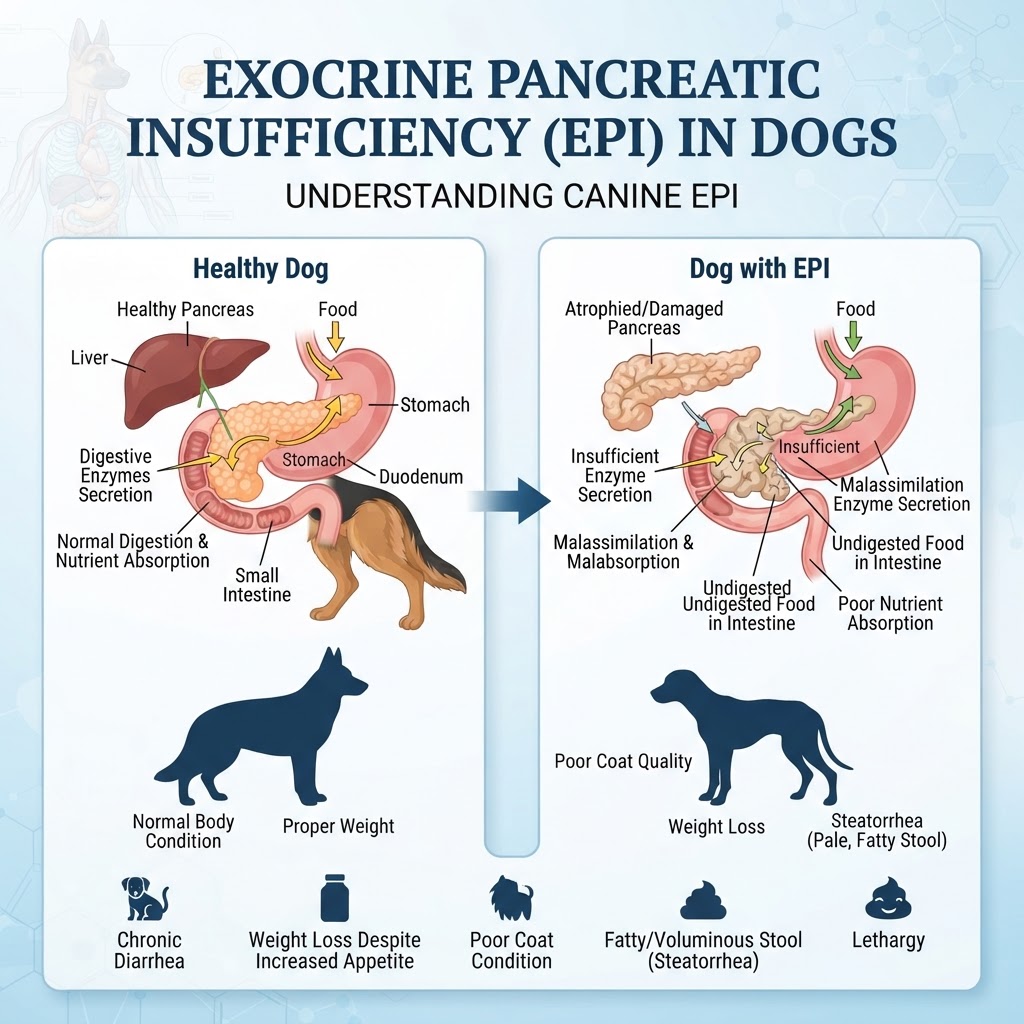
Understanding Pancreatic Acinar Atrophy and Enzyme Deficiency
Exocrine Pancreatic Insufficiency (EPI) is primarily defined by the pancreas's inability to synthesize and release the digestive enzymes required for nutrient breakdown. In many cases, this is rooted in pancreatic acinar atrophy (PAA), a degenerative process where the pancreas loses its functional tissue. When this occurs, food travels through the gastrointestinal tract largely undigested, potentially leading to symptoms mistaken for enteritis or chronic gastritis.
The Role of Protease, Lipase, and Amylase
These enzymes are vital for metabolic homeostasis. Lipase is responsible for lipid degradation, protease handles protein cleavage, and amylase facilitates starch digestion. In an EPI-affected dog, the absence of these enzymes results in maldigestion, which can mimic the clinical appearance of a gastrointestinal obstruction due to the frequency of bowel movements and overall discomfort.
Recognizing Clinical Manifestations and Malabsorption Indicators
Owners often first notice a dog that eats ravenously but remains emaciated. This paradoxical weight loss is the hallmark of the disease. Other signs, such as constipation, are rare; the stool is typically loose and voluminous.
Warning Signs for Veterinary Consultation
-
Significant weight loss despite increased caloric intake.
-
Frequent, foul-smelling, fatty diarrhea.
-
Coprophagia (ingestion of feces) as the body seeks undigested nutrients.
-
Abdominal borborygmus (loud gut sounds).
Diagnostic Approaches in the Clinical Setting
To diagnose EPI, veterinarians primarily use the Trypsin-Like Immunoreactivity (TLI) test. This blood assay measures the concentration of trypsinogen, which is produced exclusively by the pancreas. Low values are diagnostic for EPI. During the workup, the veterinarian may also assess for secondary gastroesophageal reflux or look for signs of a portosystemic shunt (acquired) if symptoms are atypical.
Therapeutic Protocols and Enzyme Replacement
Treatment is centered on pancreatic enzyme replacement therapy (PERT), which involves adding powdered, raw, or enteric-coated enzymes to every meal. This replaces the missing endogenous enzymes. Managing dietary fat intake is also essential, as high-fat diets are difficult for the compromised pancreas to process. Many dogs require cobalamin (Vitamin B12) supplementation, as the malabsorption process depletes these stores, which can lead to further neurological or gastrointestinal decline.
Managing Long-Term Nutritional Success
Consistency is key. Owners must ensure enzymes are mixed thoroughly and allowed to sit for a few minutes before feeding. While rarely associated with splenic mass or splenic torsion, the chronic inflammation associated with unmanaged EPI can affect overall systemic health.