

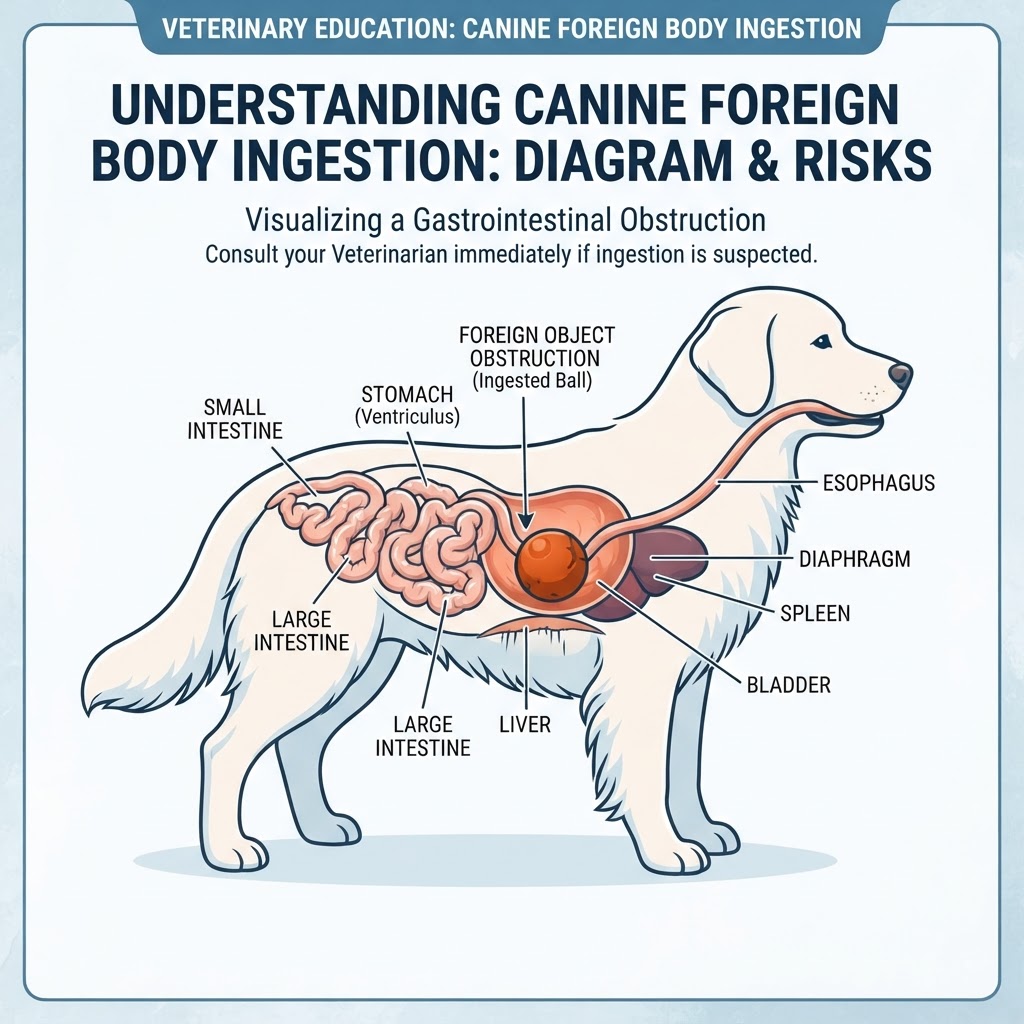
Understanding Gastrointestinal Foreign Body Ingestion
Foreign body ingestion is a common emergency in canine medicine. When a dog swallows an object that cannot be digested or passed, it results in a Gastrointestinal Obstruction, which can rapidly progress from a mild digestive issue to a life-threatening surgical emergency. Unlike simple Enteritis, an obstruction prevents the movement of gas and fluid through the bowel, leading to dehydration and electrolyte depletion.
Types of Ingested Objects
- Linear Foreign Bodies: Strings, yarn, or carpet fibers that tether at one point (like under the tongue) and bunch the intestines like a drawstring.
- Hard Objects: Rocks, metal, or dense plastic toys that cause focal pressure necrosis.
- Absorbent Materials: Fabrics or sponges that expand when exposed to stomach acid, causing sudden total blockage.
Clinical Manifestations and Emergency Indicators
The presentation of a foreign body varies. Owners should monitor for persistent vomiting or a sudden lack of appetite. While Gastroesophageal Reflux might produce occasional regurgitation, foreign bodies often cause repeated, forceful vomiting.
Signs of Intestinal Perforation
If the object pierces the bowel wall, the dog may exhibit a 'prayer position' (arched back with the front legs stretched forward), extreme abdominal tenderness, or a hard, distended abdomen. These are indicators of septic peritonitis and require immediate emergency care. If the dog shows signs of hematemesis, it may also indicate a severe Gastric Ulcer caused by the object rubbing against the stomach lining.
Diagnostic Protocols and Imaging
Diagnosis starts with a thorough physical examination and abdominal palpation. Veterinarians frequently utilize digital radiography to identify radio-opaque objects. If the obstruction is suspected but not visible, contrast studies using barium or ultrasound imaging are performed to evaluate the transit time and bowel wall integrity.
Laboratory Diagnostics
Blood panels are essential to assess for dehydration, electrolyte imbalances, and the presence of inflammatory markers. Sometimes, the systemic stress of a long-standing obstruction can lead to secondary issues that mimic chronic conditions like Protein-Losing Enteropathy, so thorough workups are vital.
Surgical and Medical Management
Treatment depends on the object's location. If the object is still in the stomach, endoscopic retrieval is preferred. If it has progressed into the intestines, enterotomy or intestinal resection and anastomosis may be required to remove the object and repair damaged tissue.