

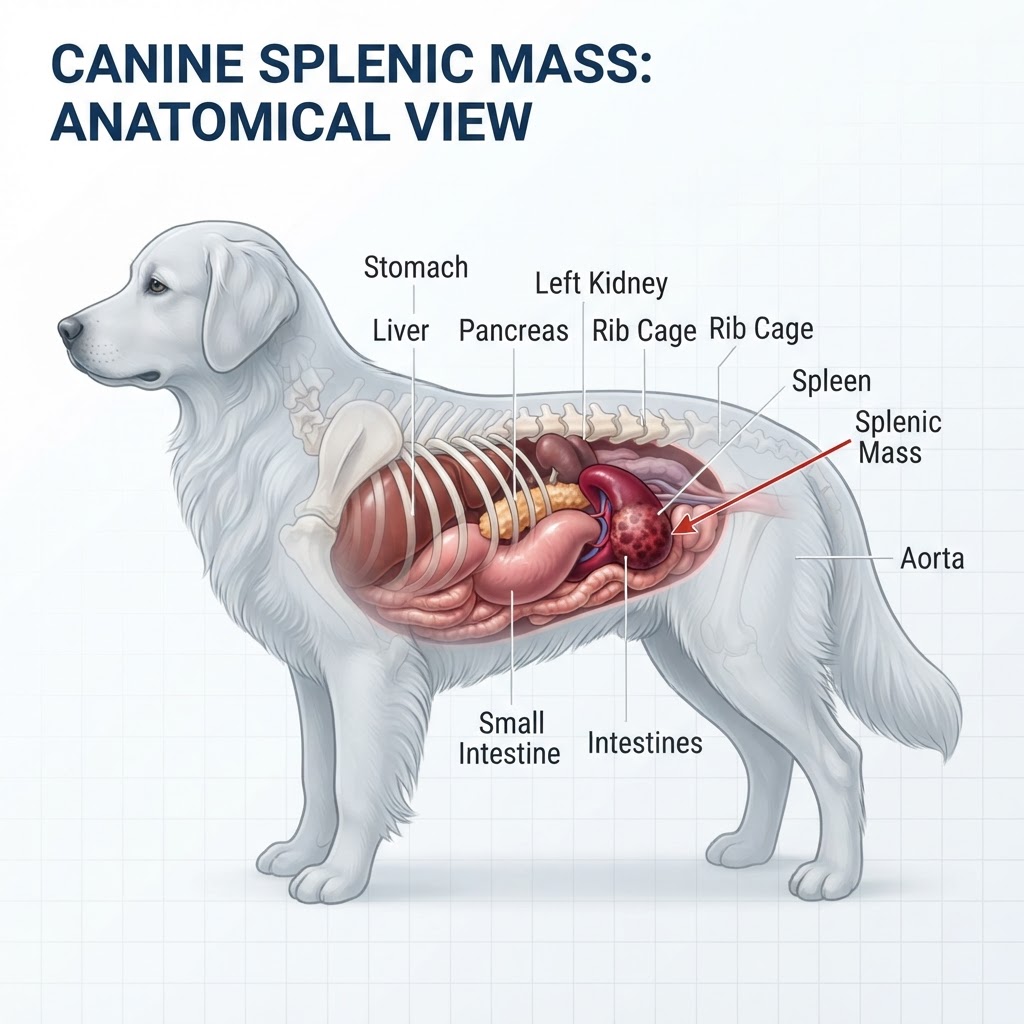
Understanding Splenic Neoplasia and Non-Neoplastic Masses
Splenic masses in dogs are complex medical findings that present a significant challenge for pet owners and veterinarians alike. The spleen serves as a vital reservoir for red blood cells and a critical component of the immune system. When a lesion develops, it is fundamentally divided into two categories: benign conditions, such as nodular hyperplasia or hematomas, and malignant processes, such as hemangiosarcoma or lymphoma.
Hemangiosarcoma: The Aggressive Reality
Hemangiosarcoma is the most frequently diagnosed malignant splenic mass. This tumor arises from the endothelial cells that line blood vessels. Because it is highly invasive and prone to metastasis, it often goes undetected until a rupture event occurs. Owners should be aware that even a mass that is not yet ruptured can lead to gastritis secondary to chronic discomfort, or in some instances, mimic symptoms associated with constipation if the mass causes significant abdominal distension.
Recognizing Clinical Signs and Emergency Indicators
Symptoms are often silent until the mass becomes significantly large or undergoes a rupture. Early detection is rare, but observing subtle changes in behavior can lead to early diagnosis.
Chronic Symptoms
- Lethargy and exercise intolerance
- Decreased appetite and weight loss
- Distended abdomen
- Pale mucous membranes
Acute Warning Signs (Emergency)
If a mass ruptures, the dog may experience sudden weakness, collapse, pale gums, and rapid breathing. This is a critical state that can quickly escalate to peritonitis if the hemorrhage is extensive. Unlike minor gastrointestinal issues that might be confused with enteritis, a ruptured splenic mass is an absolute veterinary emergency.
Diagnostic Pathways and Surgical Evaluation
Veterinarians utilize a combination of diagnostic modalities to assess the risk level of the mass. Abdominal ultrasound is the primary tool used to characterize the mass and evaluate the liver and other abdominal organs for metastatic disease. Routine blood work, including a complete blood count, is essential to determine if the animal is currently experiencing anemia. In cases where blood flow to the gut is compromised by the mass, symptoms might occasionally overlap with gastrointestinal obstruction.
Surgical Intervention
Splenectomy—the removal of the spleen—is the standard of care for most dogs diagnosed with a significant splenic mass. Removing the spleen allows for accurate histopathology, which provides the only definitive diagnosis of whether the mass is benign or malignant. Following surgery, management involves close monitoring of heart rhythm, as cardiac complications can occasionally arise after splenectomy, and systemic evaluation to ensure no secondary organ damage from hepatic failure has occurred due to metastatic spread.